
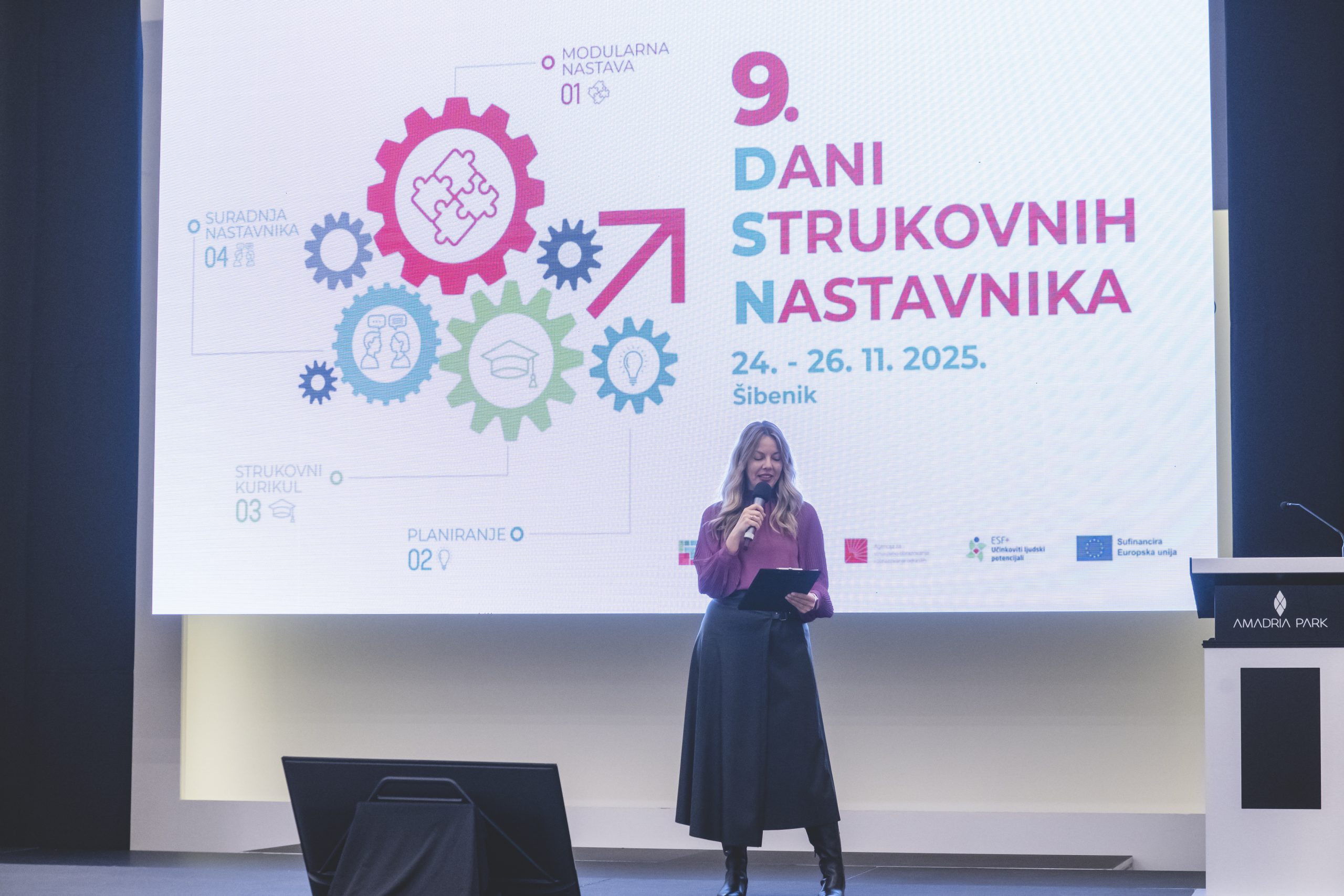
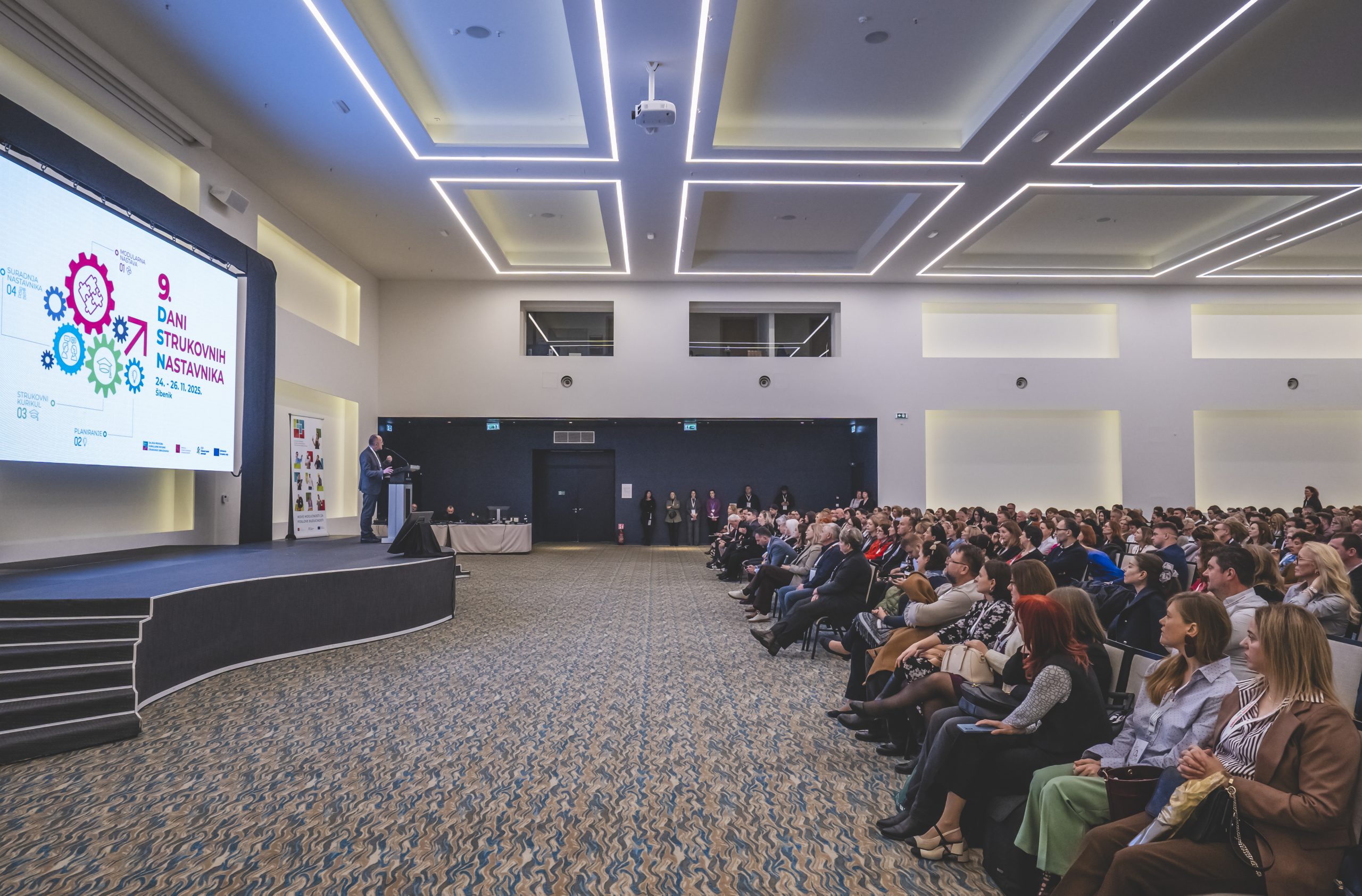
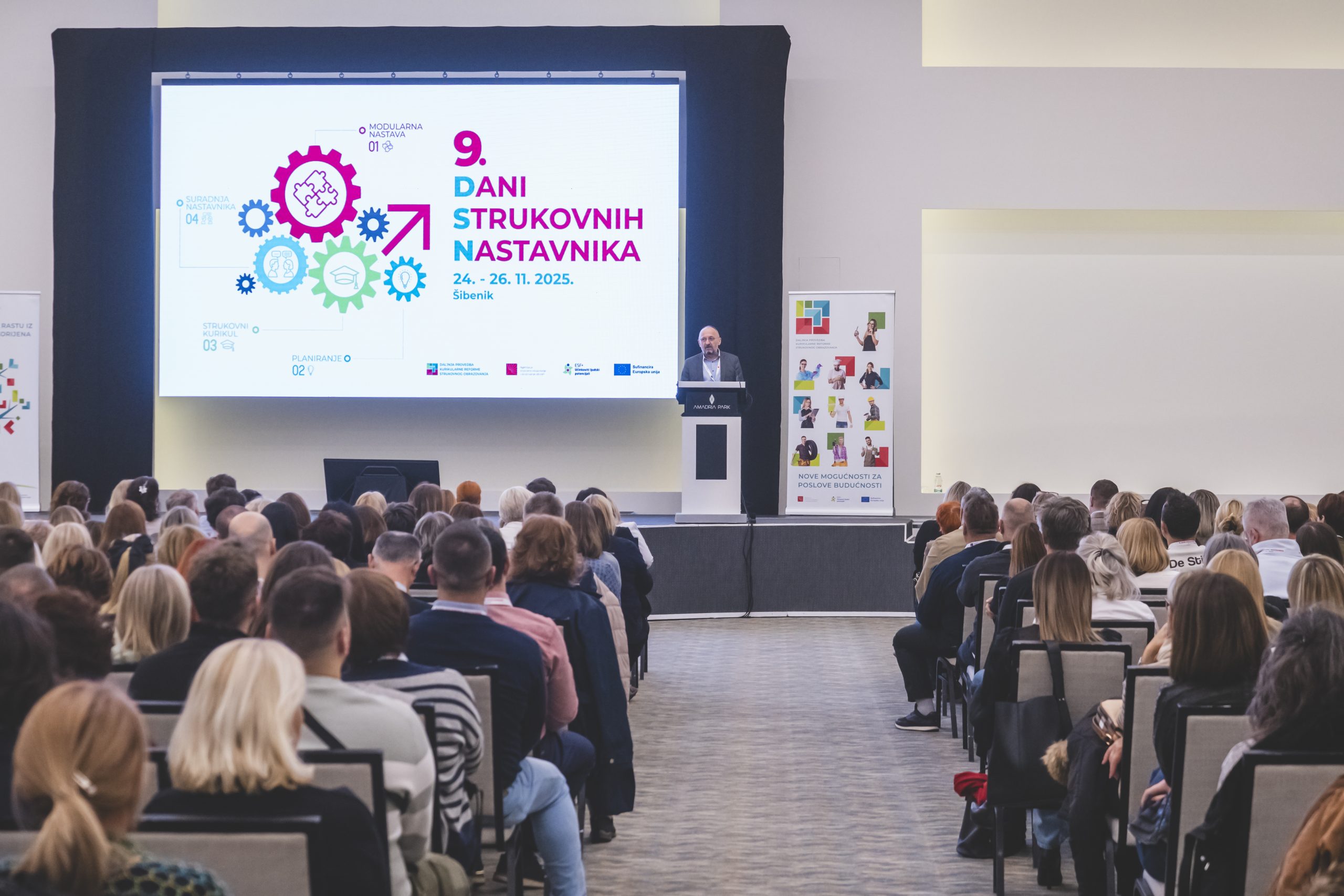
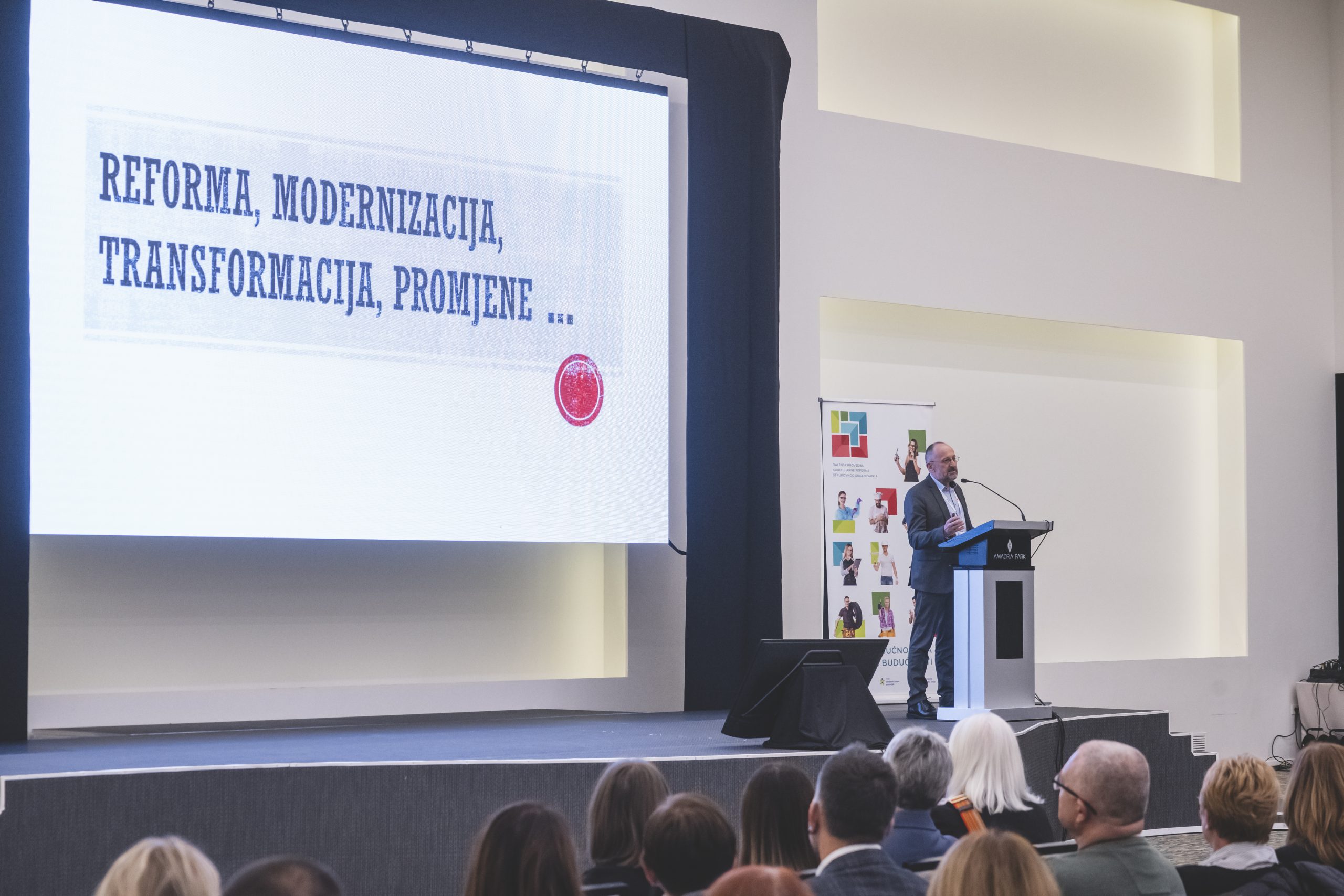
The ninth national conference, Vocational Teachers’ Days was held in Šibenik, at Amadria Park, from 24 to 26 November 2025. It gathered almost 500 participants from all over Croatia. This year’s conference focused on the changes in the vocational education system through modular instruction and the introduction of new curricular documents.
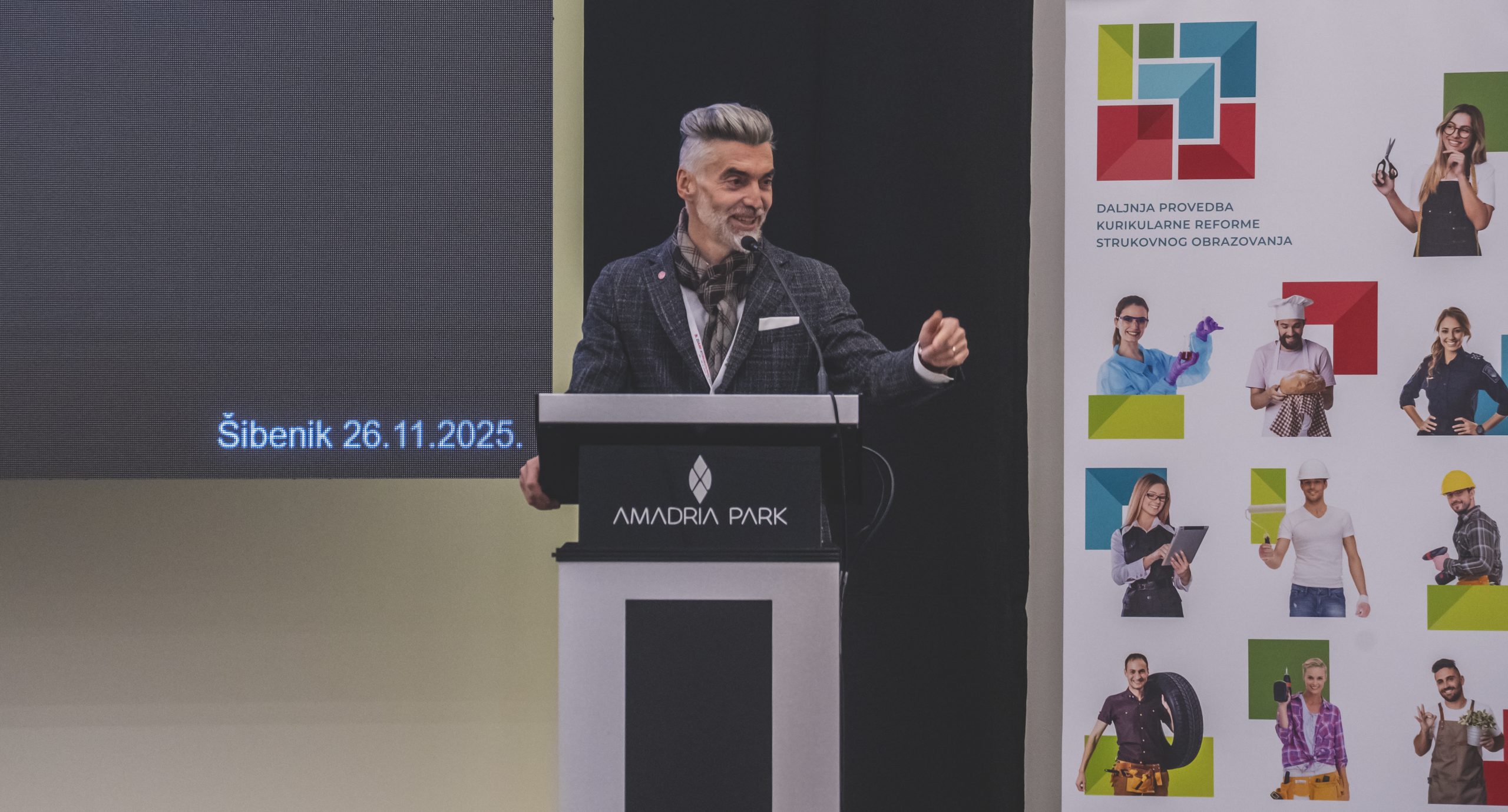
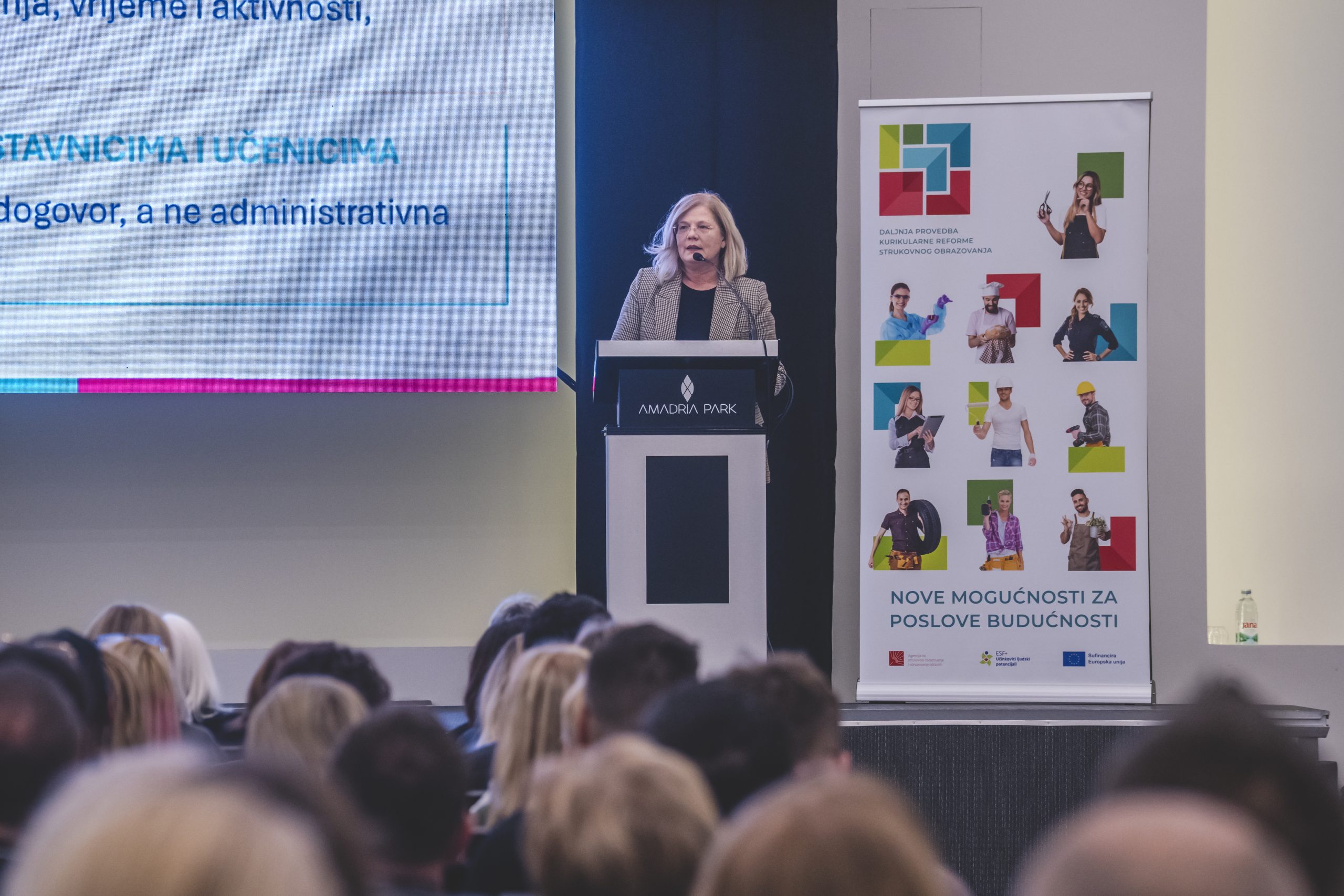
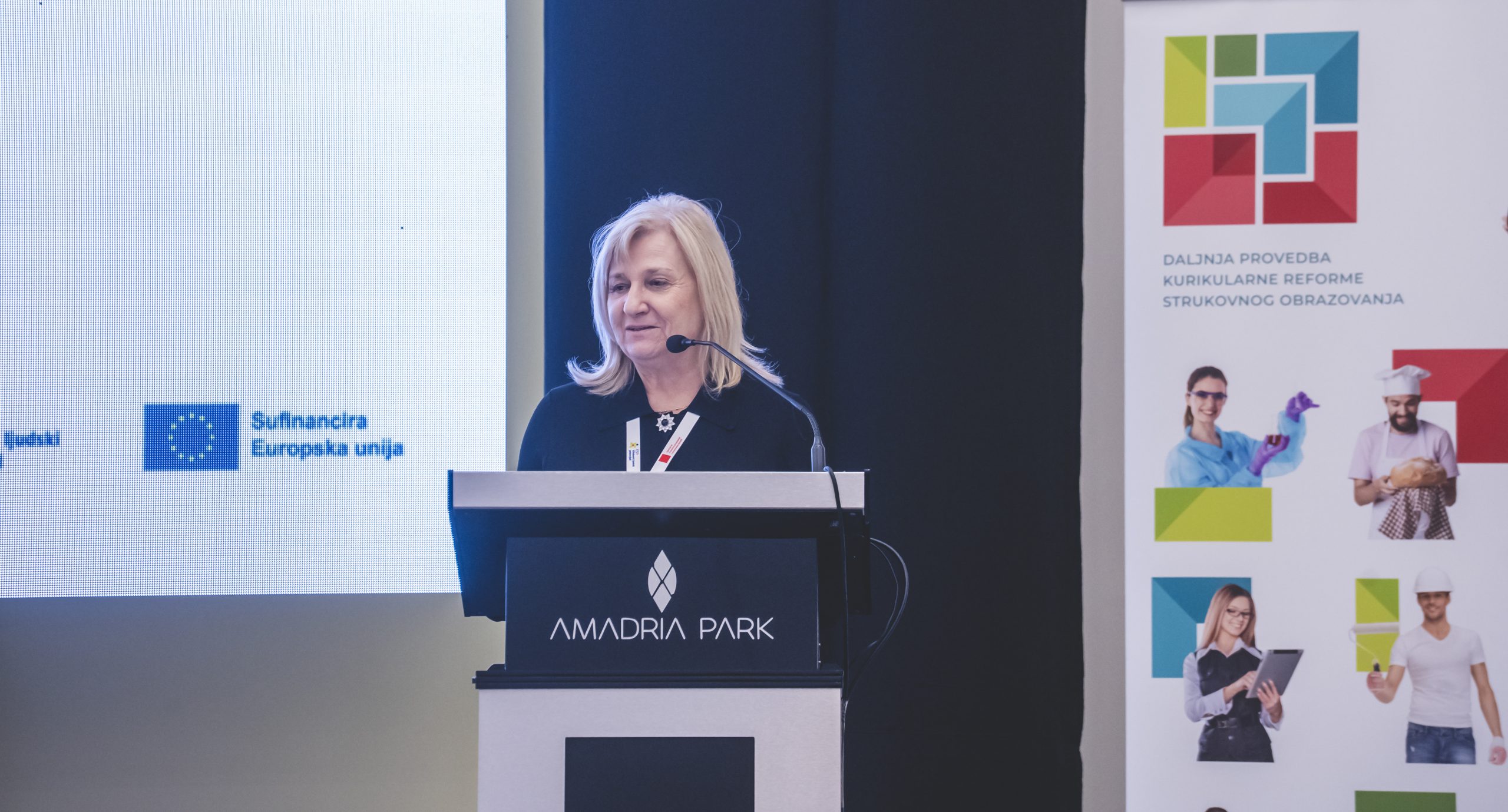
The event was officially opened by the Director of the Agency, Mr. Mile Živčić, and the Director of the Directorate for Education, Vesna Šerepac, M.Sc., also addressed the attendees as the envoy of the Minister of Science, Education, and Youth. Over the course of three days, participants had the opportunity to attend sectoral workshops and plenary lectures presenting examples of good practice:
Assoc. Prof. Dr. Mislav Balković, Rector of Algebra Bernays University, gave a lecture on the topic of “Education for the Future.” In his presentation, he spoke about the need for developing digital competencies, creativity, and human collaboration with technology, in the context of the accelerated development of artificial intelligence and changes in the labour market.
Izv. prof. dr. sc. Mislav Balković_Obrazovanje za budućnost
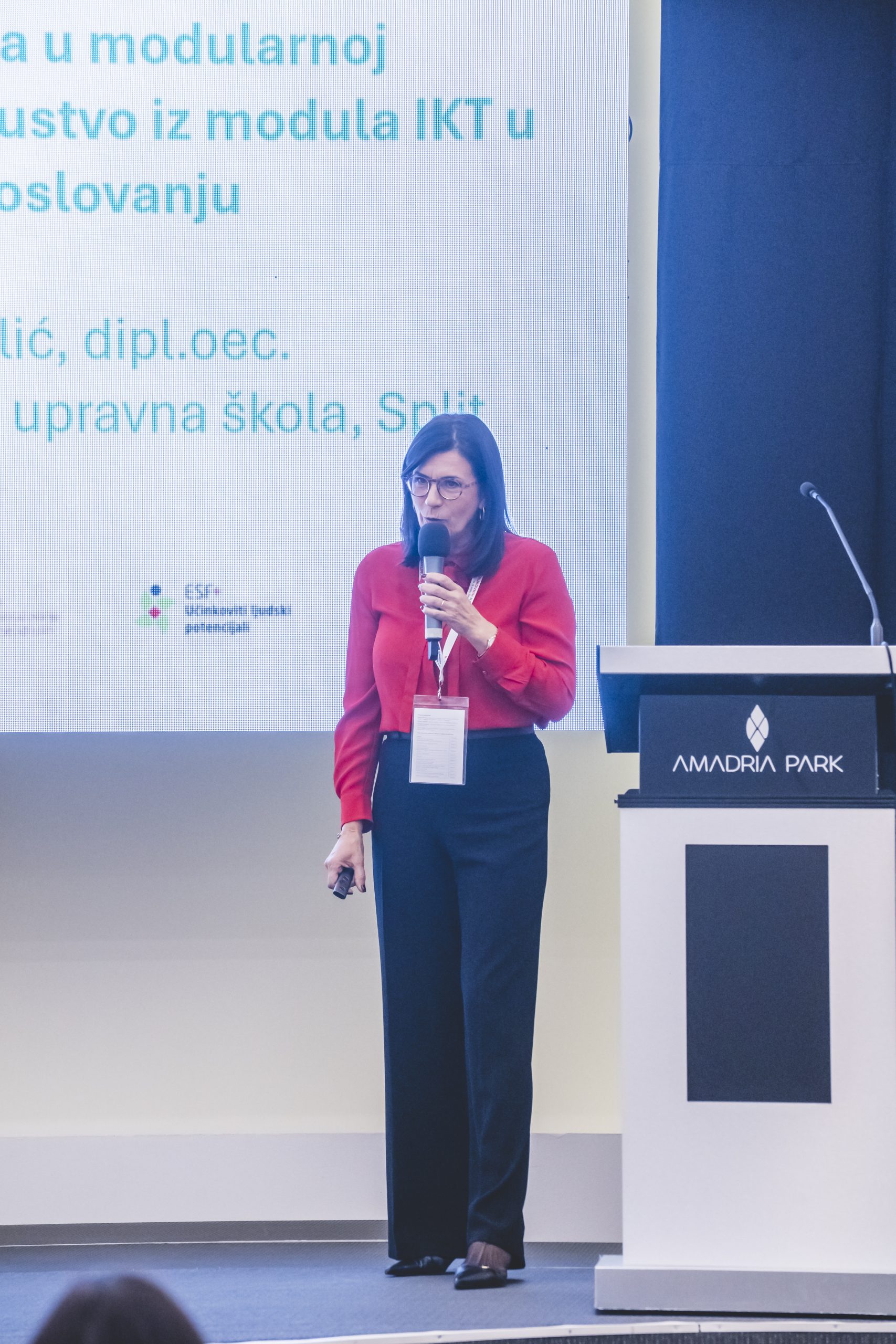
Suzana Mikulić, “Responsibility, Collaboration and Communication in Modular Teaching – Experience from the ICT in Office Operations”
Suzana Mikulić, M.Sc., presented the culture of responsibility in modular teaching in her plenary lecture. As such, modular teaching develops responsibility, collaboration and communication through integrated scenarios and team planning. Activities include digital collaboration, online presentations and joint projects. This way of working offers multiple benefits for students and teachers. It enables teachers to develop professional competencies and better alignment of learning outcomes and activities, while it helps students develop collaborative and communication skills and boost self-confidence.
Suzana_Mikulić_Odgovornost suradnja i komunikacija u modularnoj nastavi
Sanja Arambašić, “Active Classroom – Transform the Listener into a Creator”
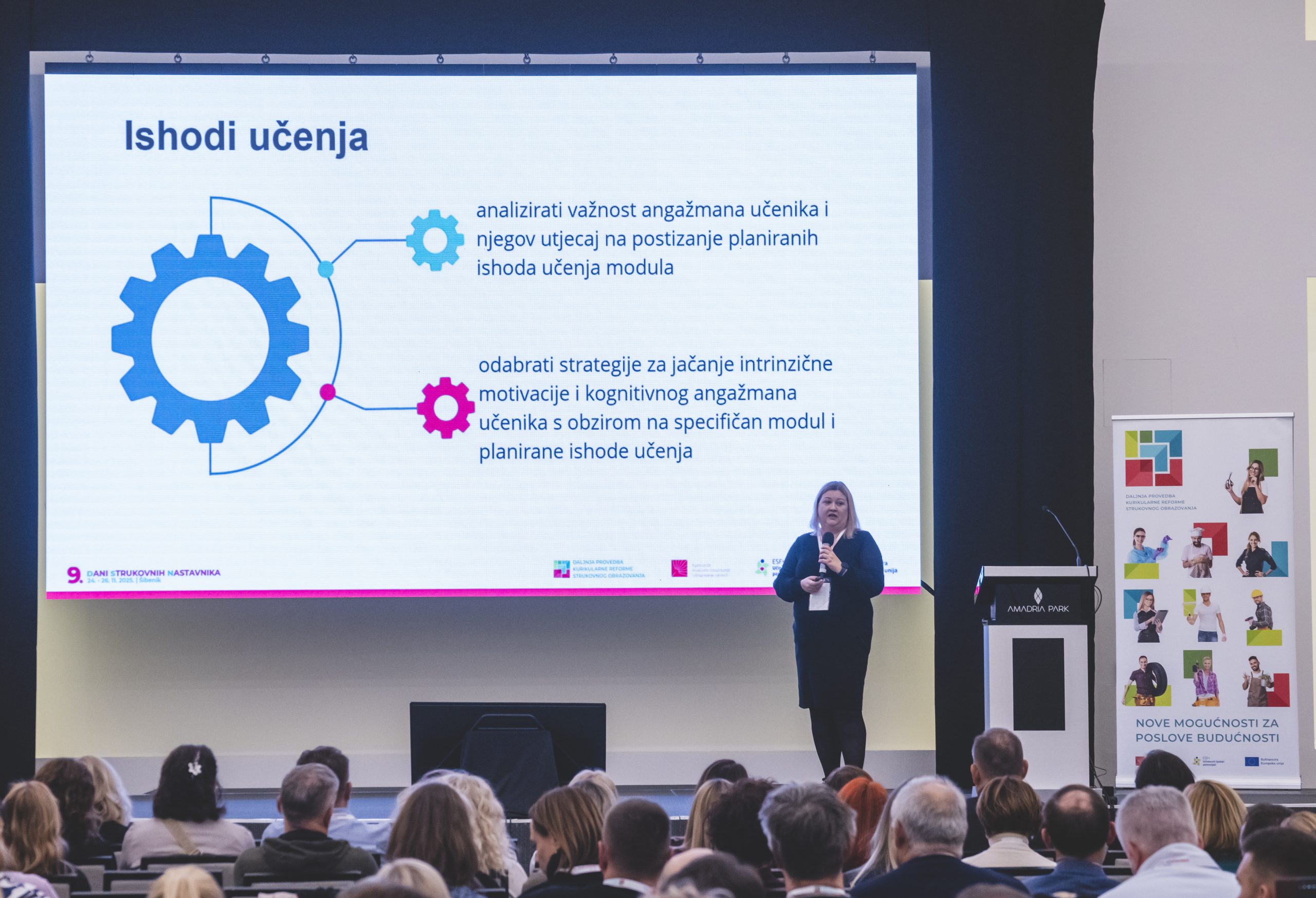
In her lecture, Sanja Arambašić, M.Sc., highlighted the importance of student engagement and its impact on achieving planned learning outcomes. It is essential to select strategies that will help strengthen students’ intrinsic motivation and cognitive engagement, considering the specific module and planned learning outcomes. She particularly emphasized methods like Think-Pair-Share, Learning Stations, Peer Teaching, Project-Based Learning, and Growth Mindset, through which students take responsibility for their work and, at the same time, learn to adapt to new challenges – today in school, tomorrow in the workplace.
Sanja Arambašić_Od učenika do kreatora
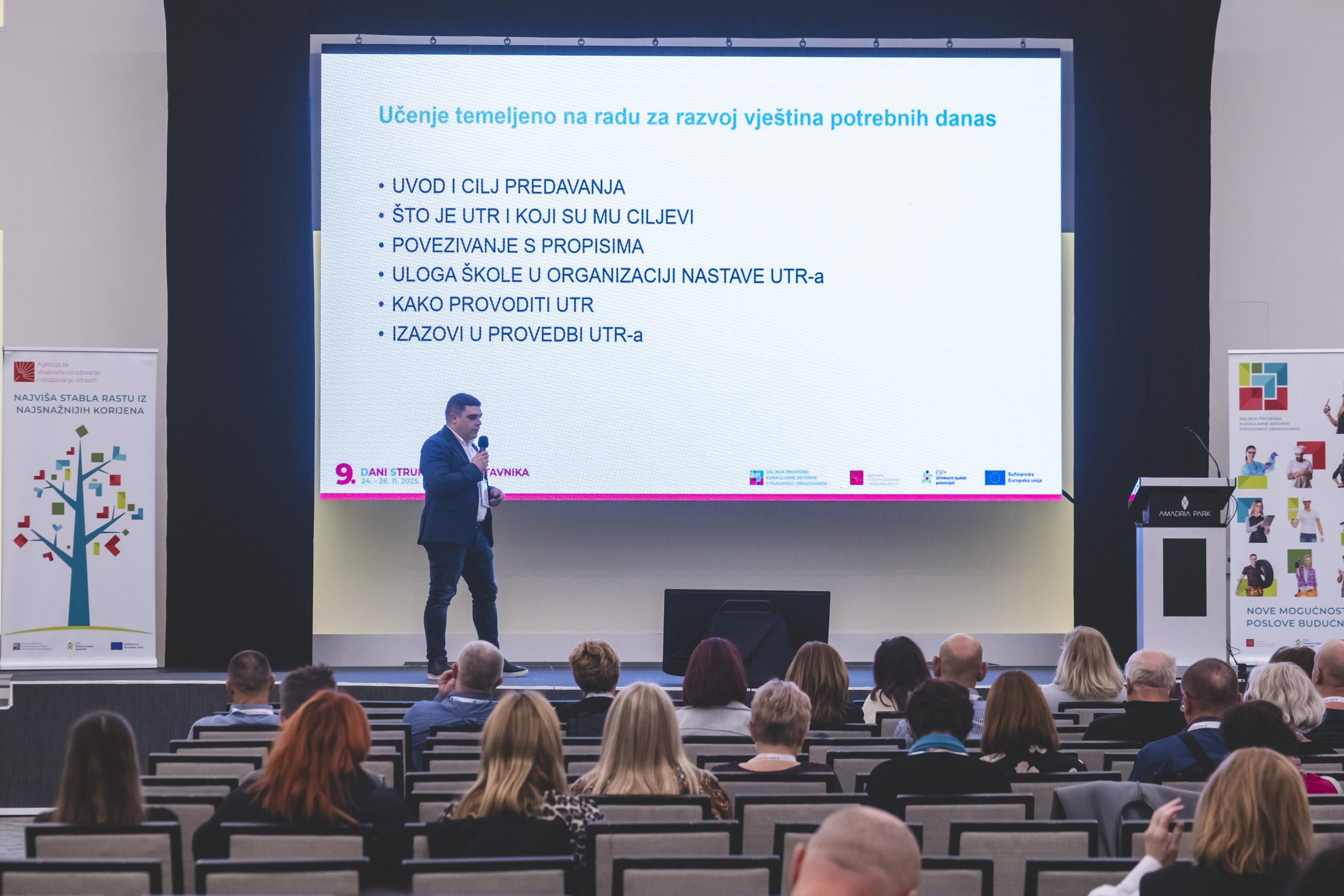
Tomislav Antolović, “Work-Based Learning for Developing Today’s Required Skills”
In his lecture, Tomislav Antolović, Director of the Electromechanical Trade School in Zagreb, pointed out how Work-Based Learning (WBL) connects schools and employers and allows for better acquisition of competencies through real-life work tasks. When learning outcomes are achieved in a genuine work environment, the student develops confidence, responsibility, and a professional attitude towards work. The ultimate goal is for the school to be a place where students learn in a way that matches today’s labour market and modern technology.
Tomislav_Antolović_Učenje temeljeno na radu za razvoj vještina potrebnih danas
Damir Jakšić, “From ‘I Know’ to ‘I Can’ – Authentic Assessment and Digital Tools in Full Swing”
The lecture by Damir Jakšić, MSc in EE, highlighted the importance of the concept of authentic assessment. New teaching methods will facilitate teachers’ implementation of WBL and help students become more competent in their work. Authentic assessment is achieved through work situations, e-portfolios, and clear rubrics. The combination of formative and summative approaches, practical tasks, and triangulation of evidence allows for a greater focus on competencies and realistic work challenges.
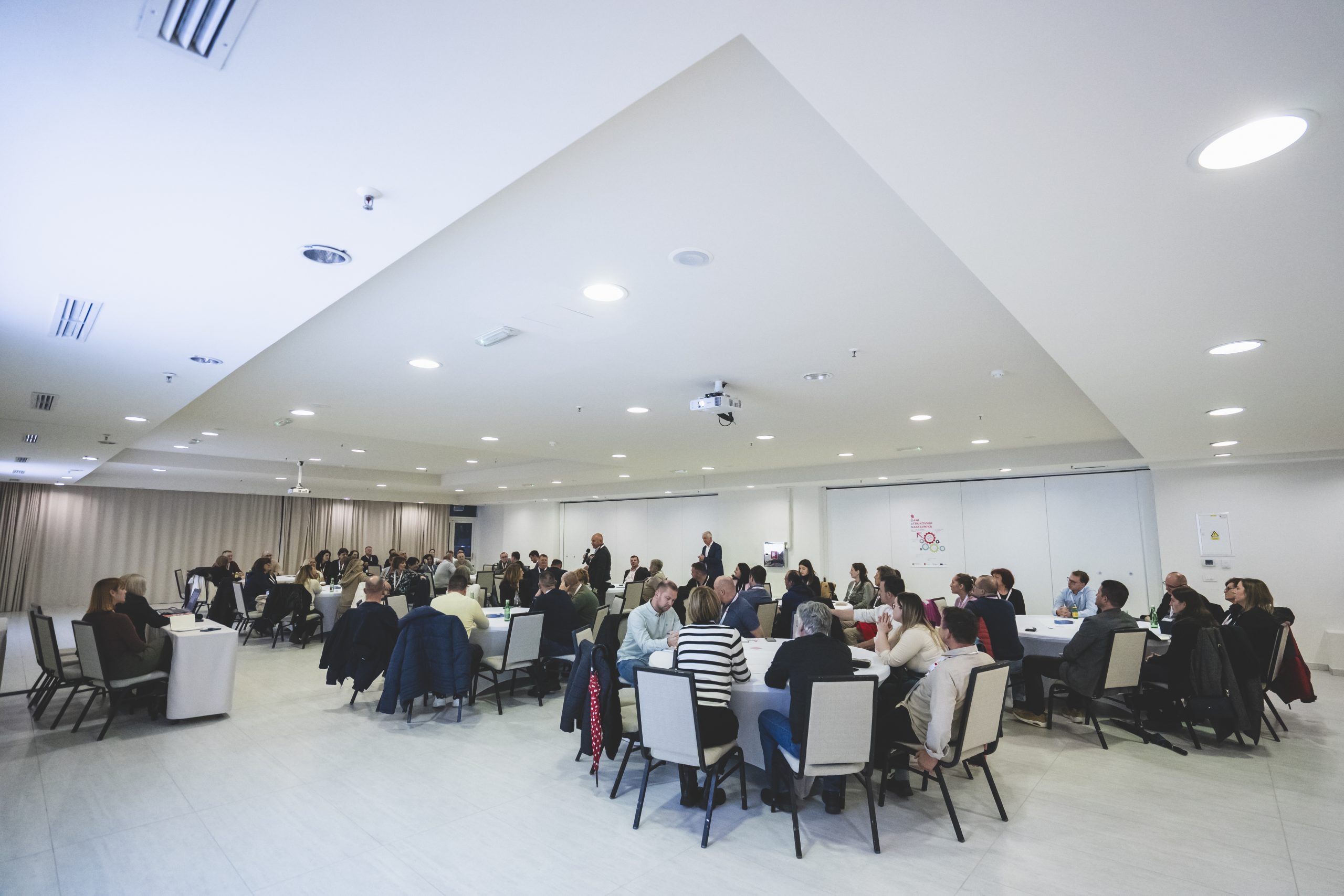
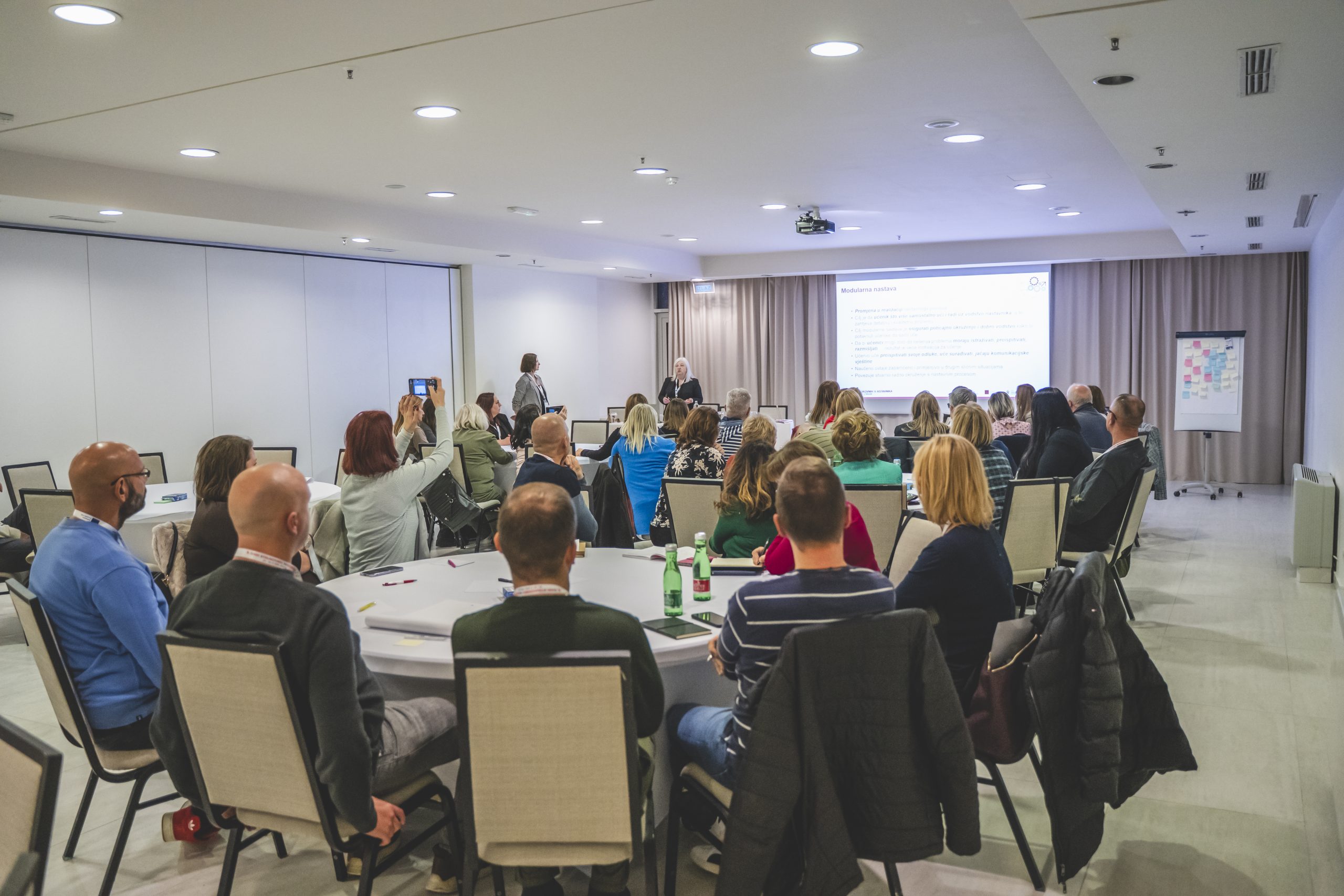
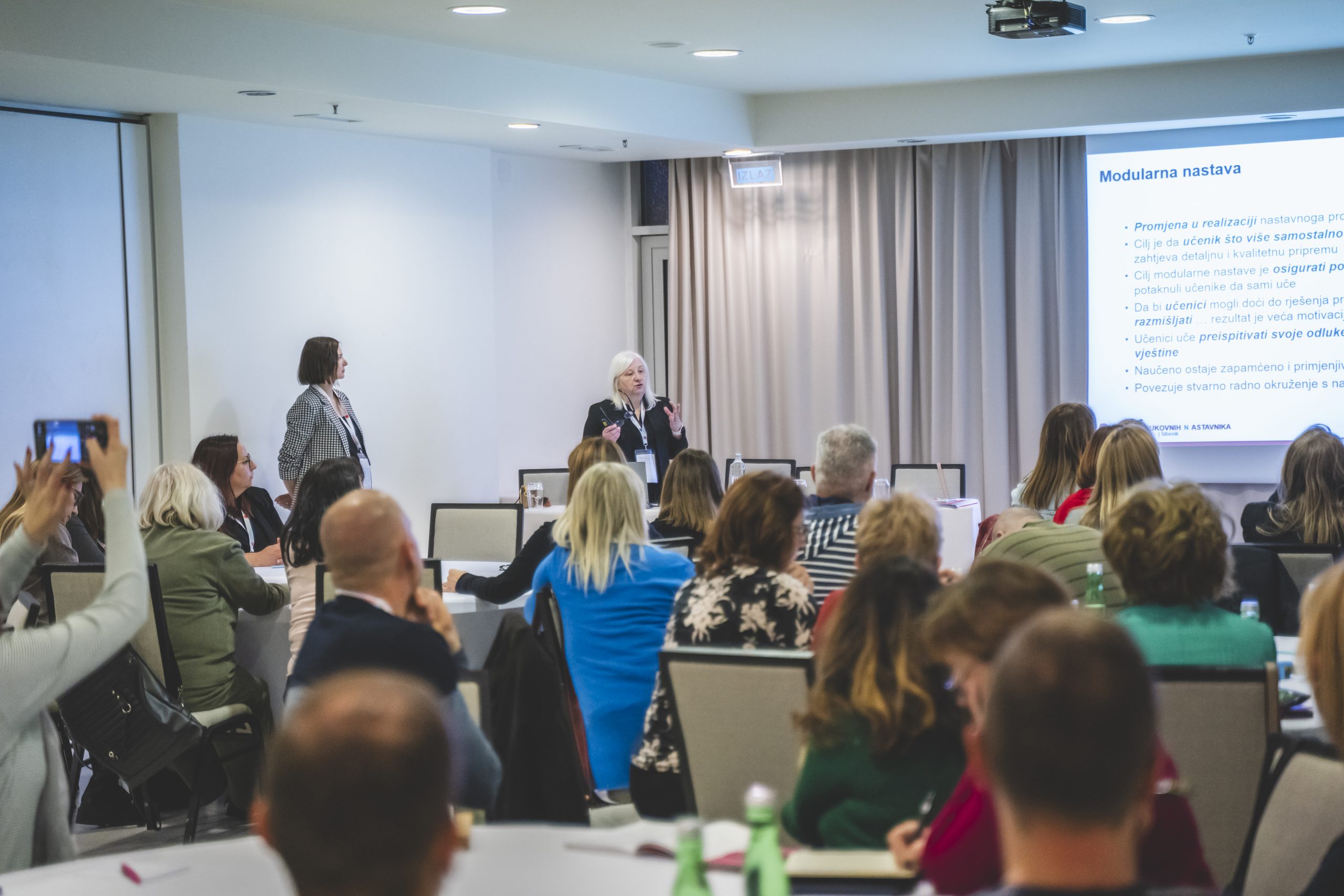
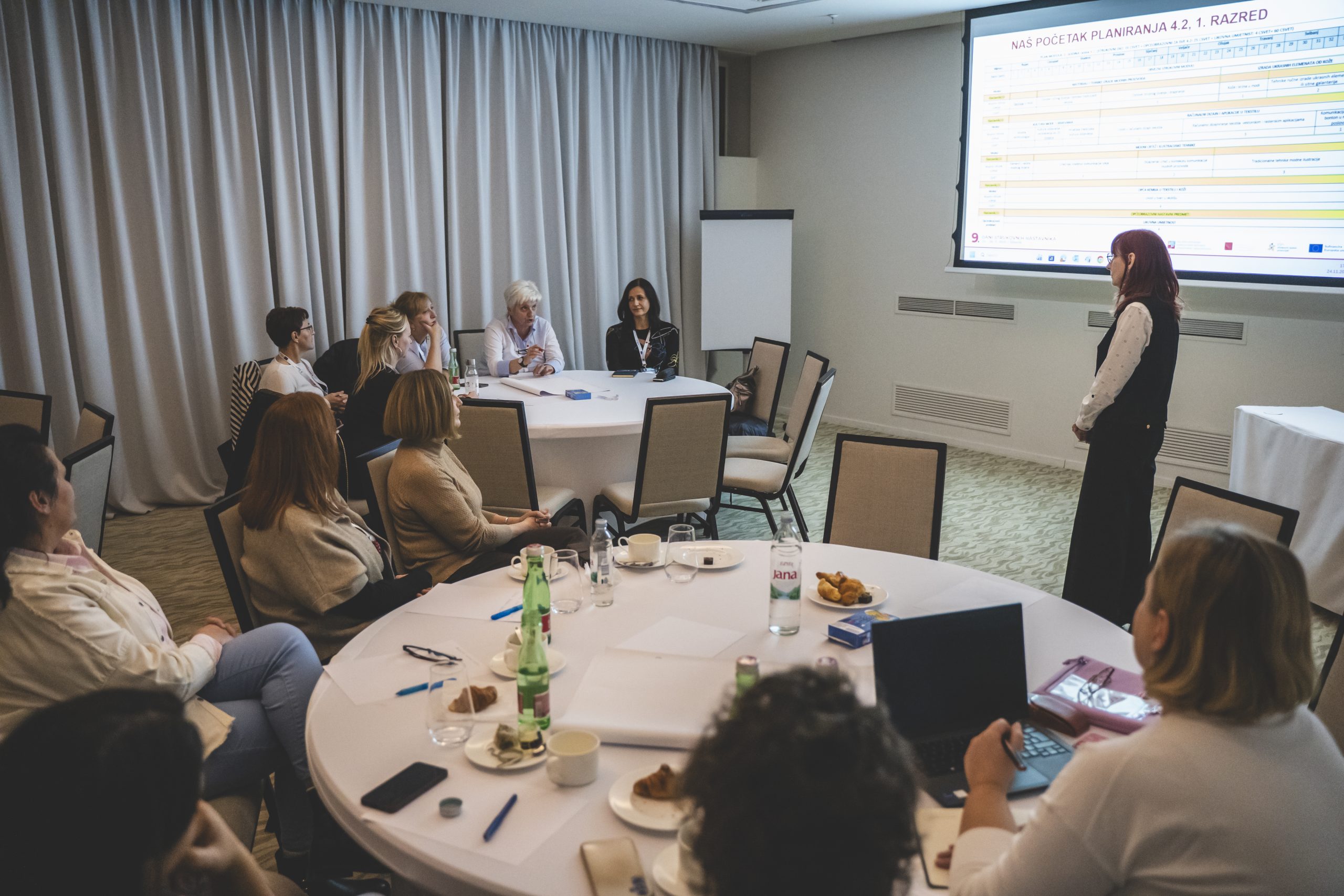
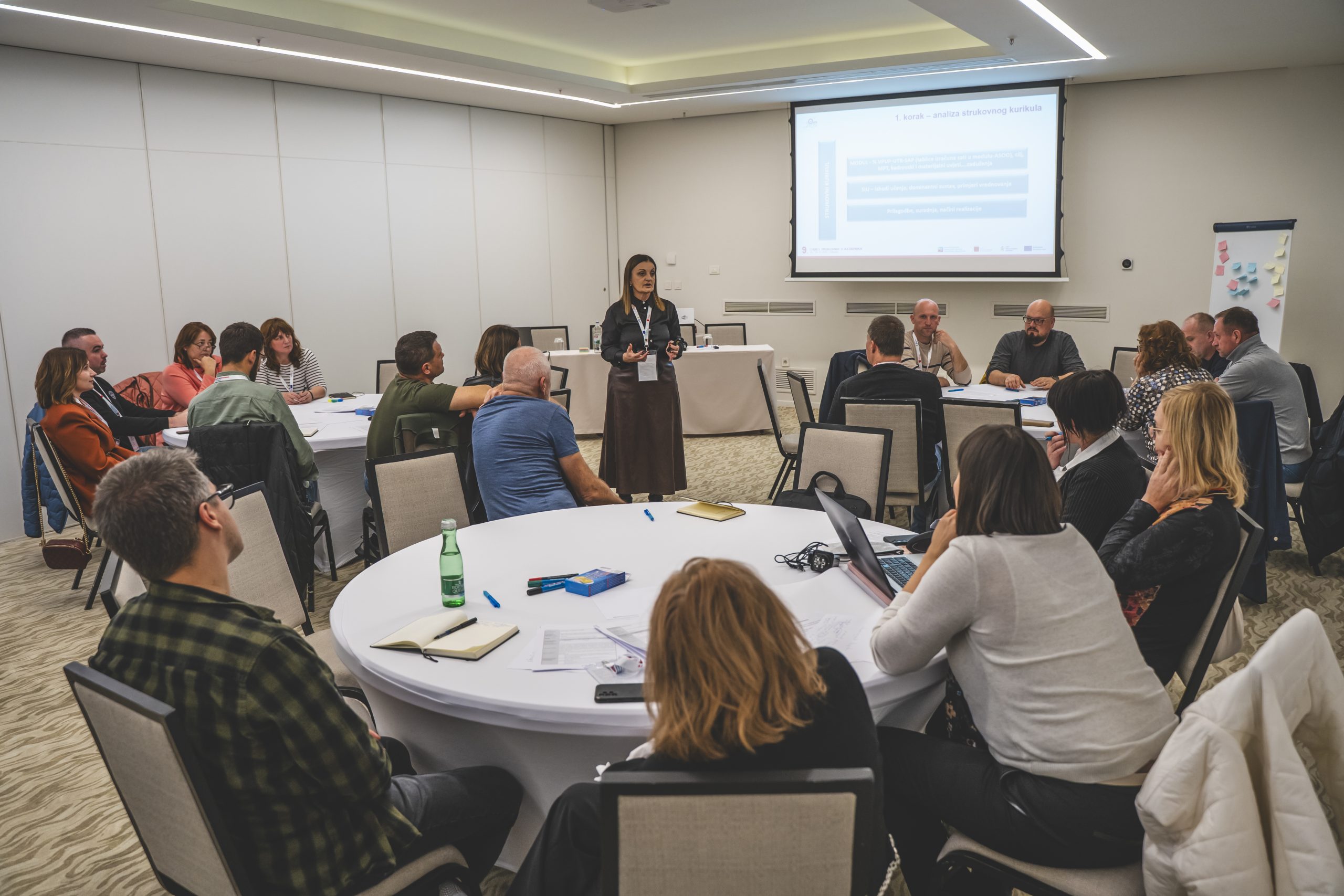
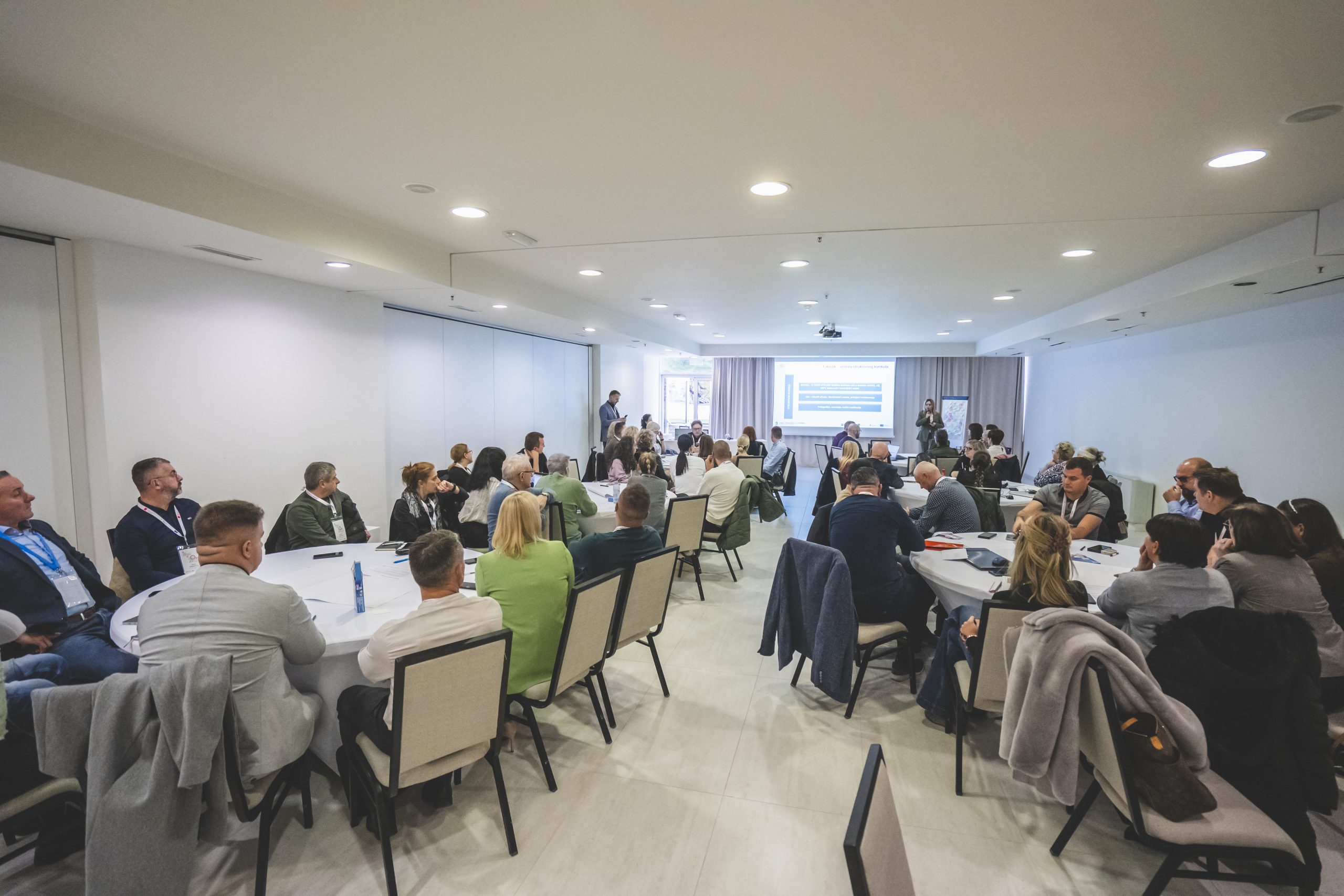
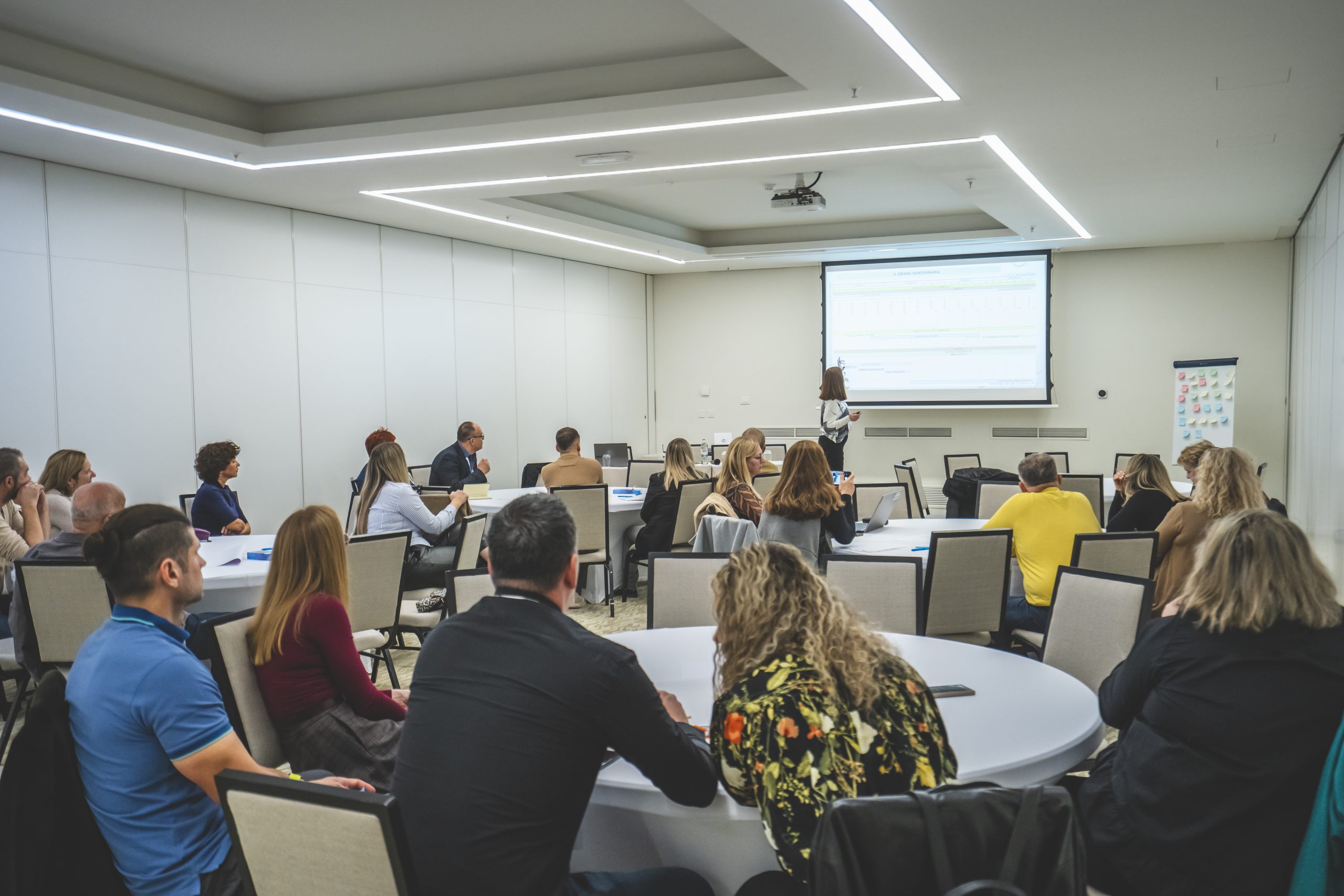
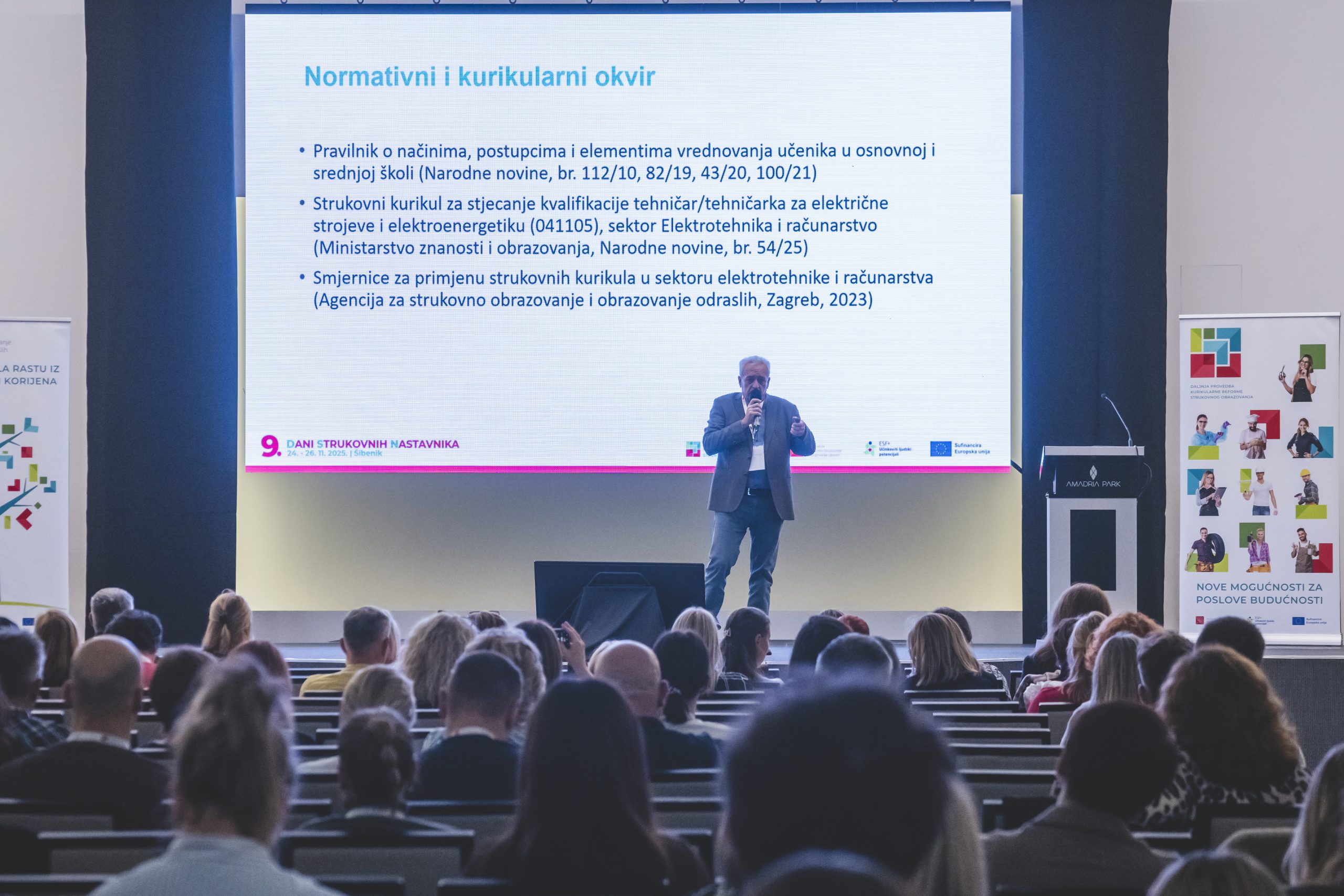
In addition to the plenary lectures, workshops were held for all sectors of vocational education, led by sectoral advisors. A special emphasis was placed on the integration of new curricular documents, the development of competencies, and connecting theory with practice.
PPT Elektrotehnika i računarstvo_DSN 2025
PPT Ekonomija i trgovina i PPSDUiJP_DSN 2025
PPT Graditeljstvo, geodezija i arhitektura_DSN 2025
PPT Grafička tehnologija i audiovizualne tehnologije_DSN 2025
PPT Moda, tekstil i koža_POSEBNI KURIKULI_DSN 2025
PPT Promet i logistika_DSN 2025
PPT Strojarstvo i brodogradnja_DSN 2025
PPT Turizam i ugostiteljstvo DSN 2025
PPT Poljoprivreda, prehrana i veterina_DSN 2025
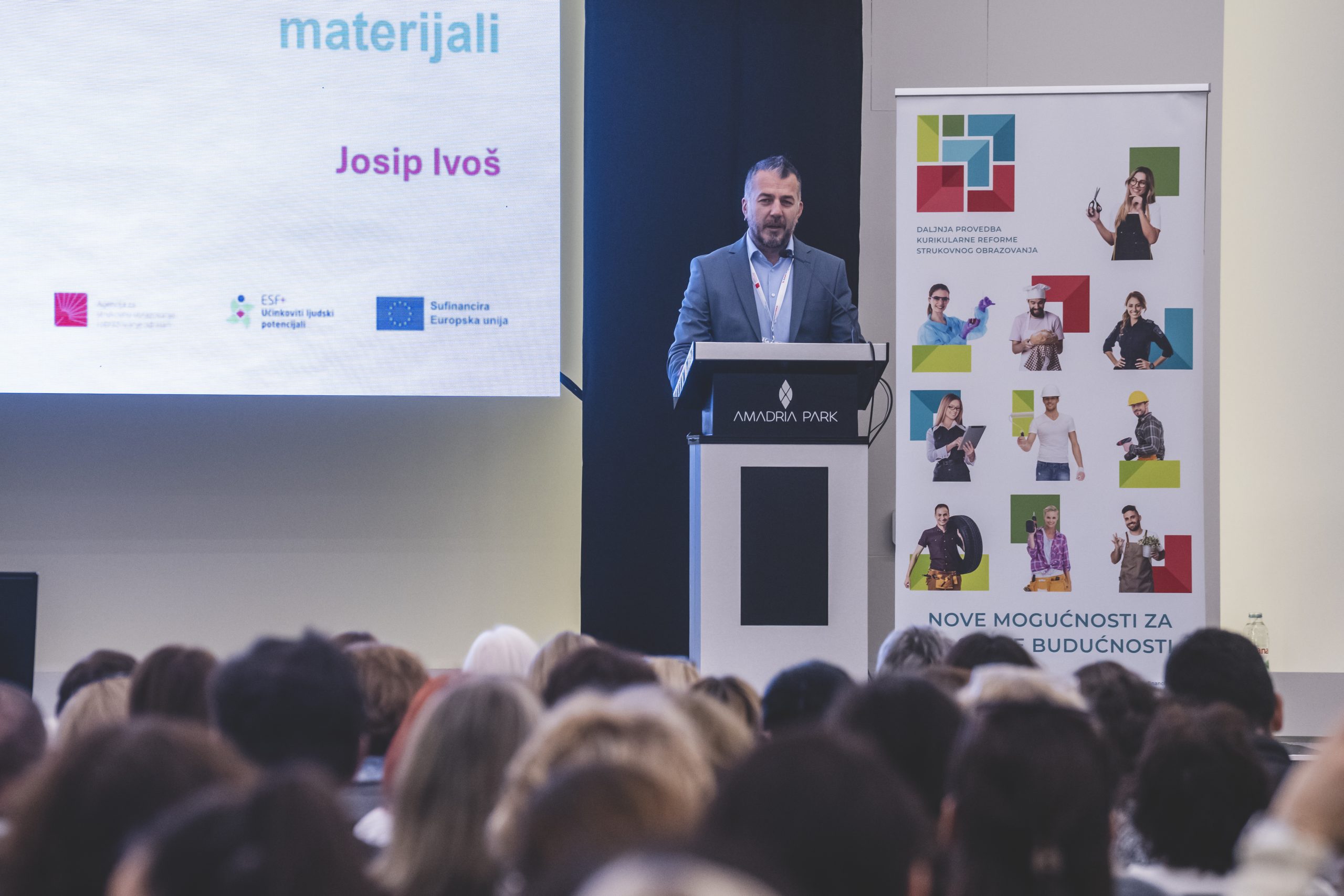
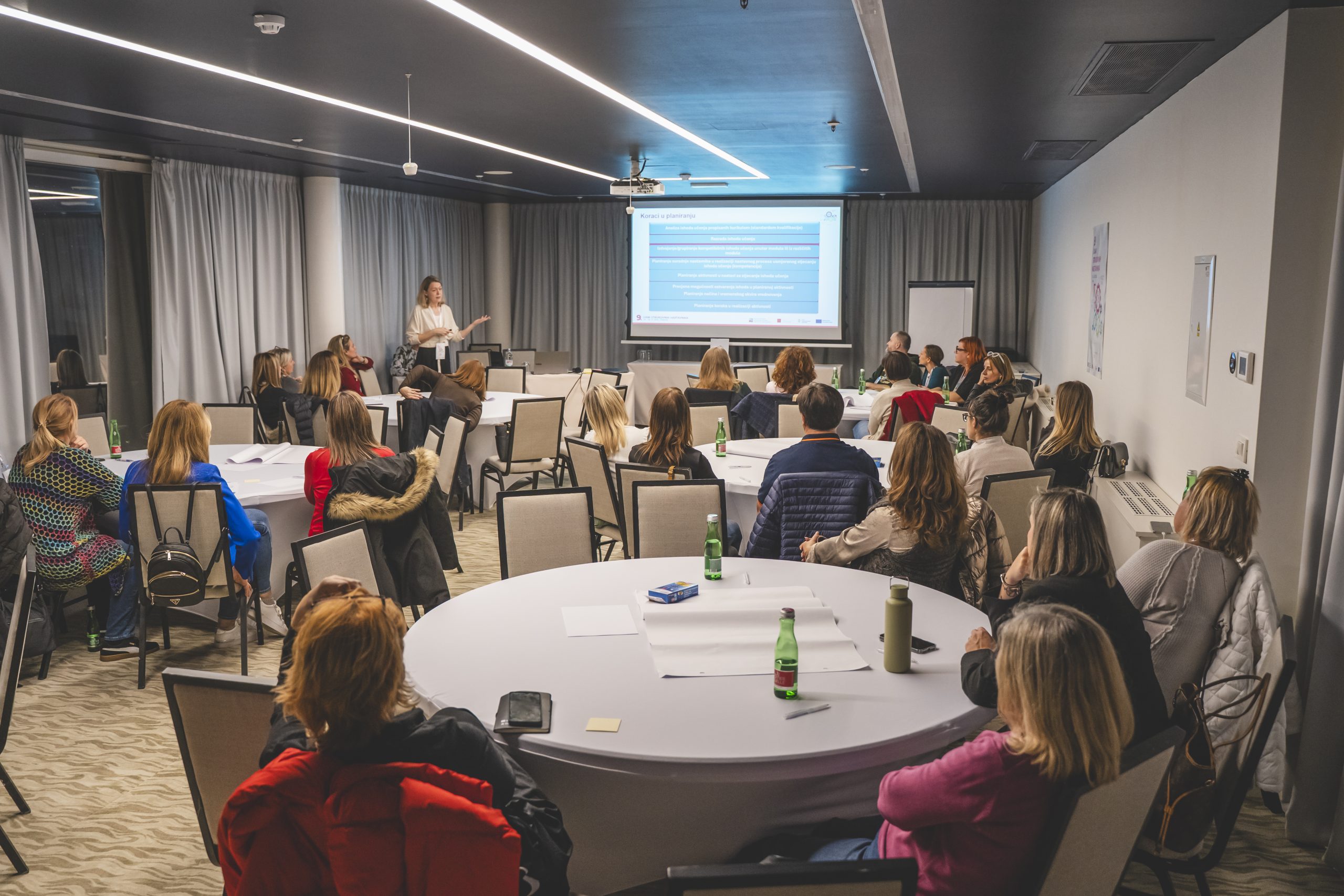
On the final day of the conference, Vesna Anđelić, Assistant Director for Vocational Education Development, spoke about planning, implementation, and assessment in modular instruction. She highlighted the importance of a meaningful implementation curriculum, connecting outcomes with activities, and teacher collaboration to preserve modularity. Josip Ivoš, Head of the Monitoring and Evaluation Department, presented FreeDOM, a digital repository for other educational materials. FreeDOM provides free access to handbooks, curricula, modules, and other educational content, and is intended for students, teachers, and adult education participants.
Vesna Anđelić_Planiranje, izvedba i vrednovanje u modularnoj nastavi
The Vocational Teachers’ Days confirmed the importance of exchanging experiences, examples of good practice, and collaboration with employers as key steps for implementing modular instruction and new curricular documents.
SHARE