
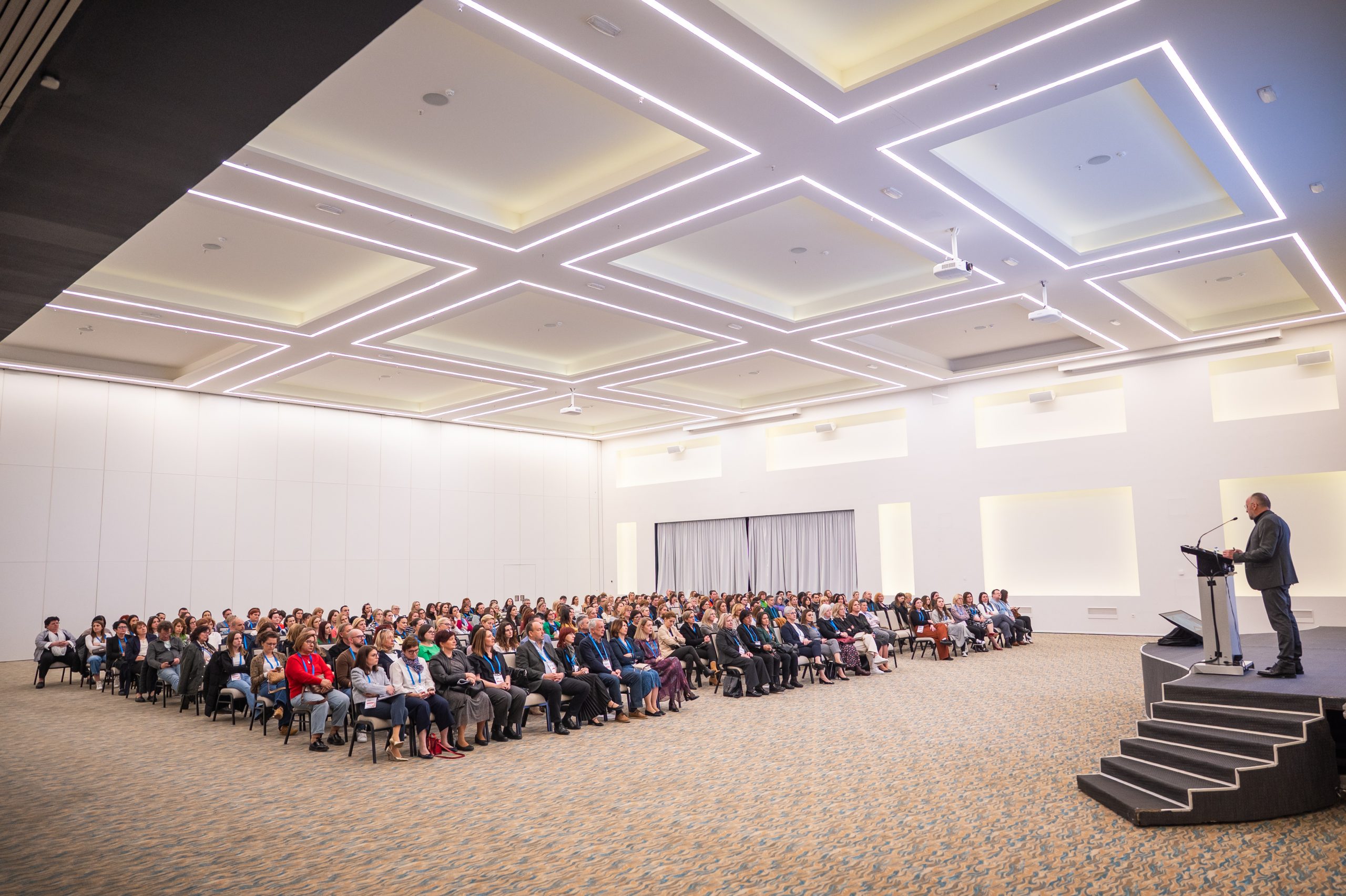
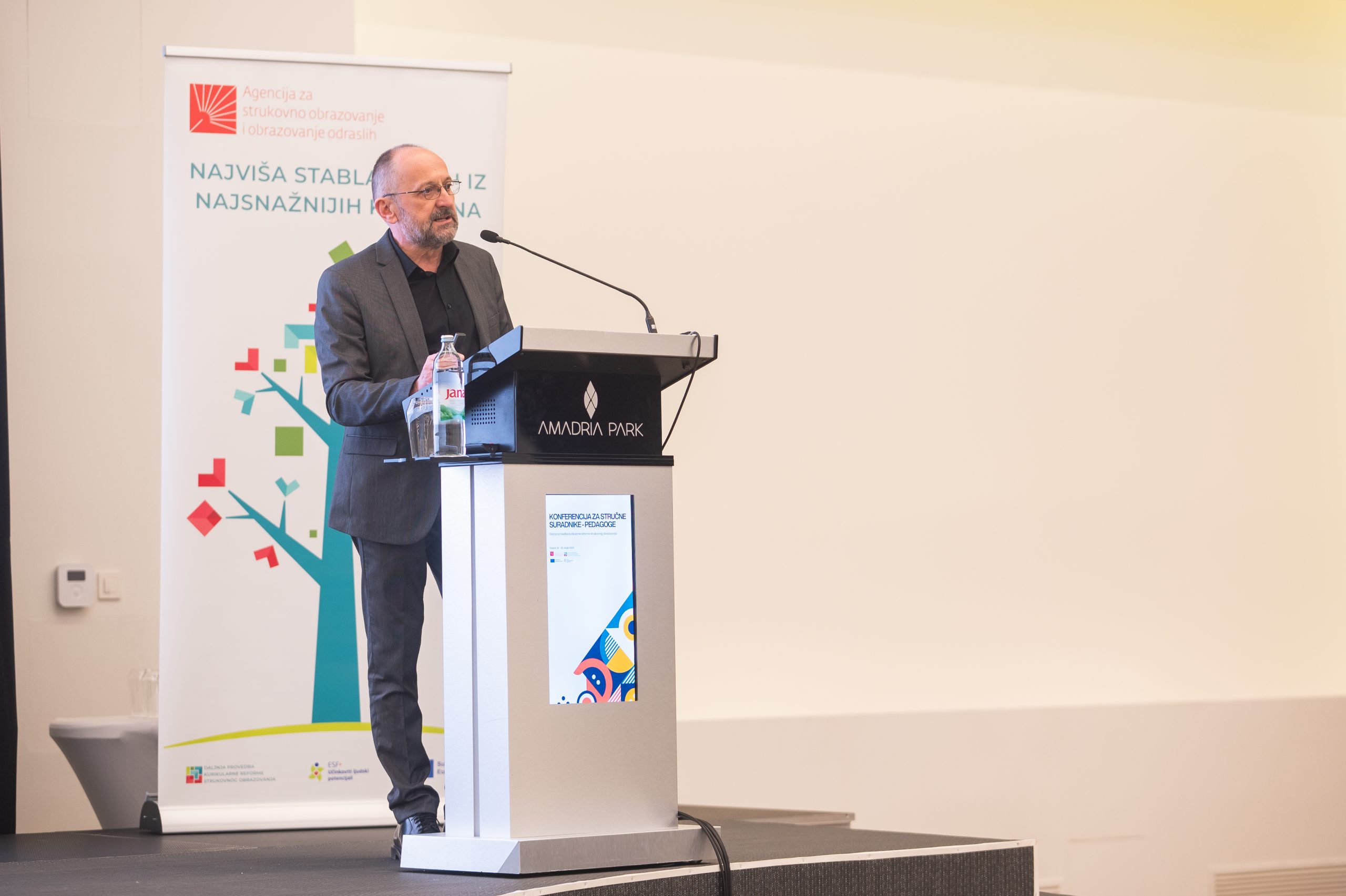
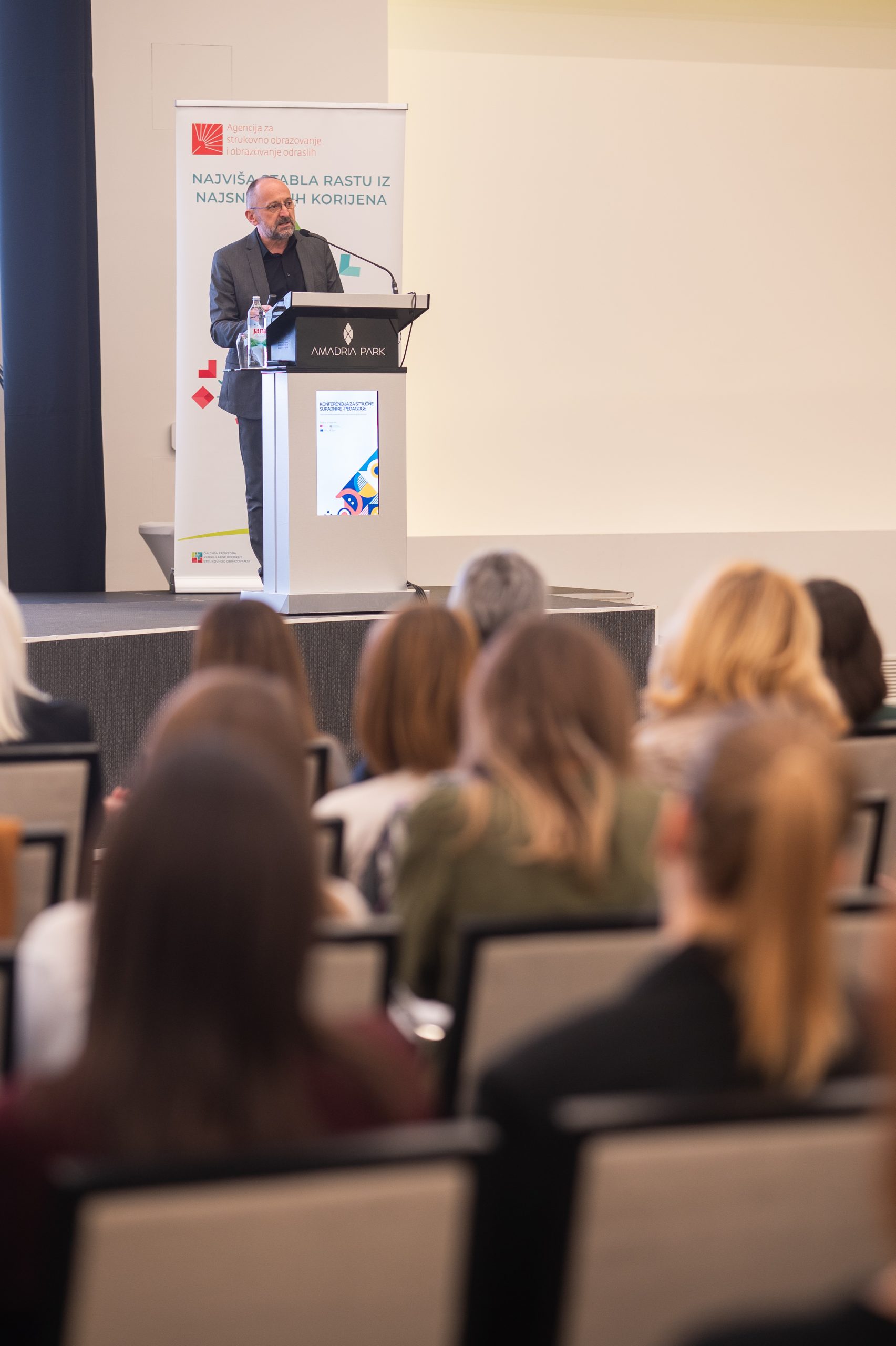
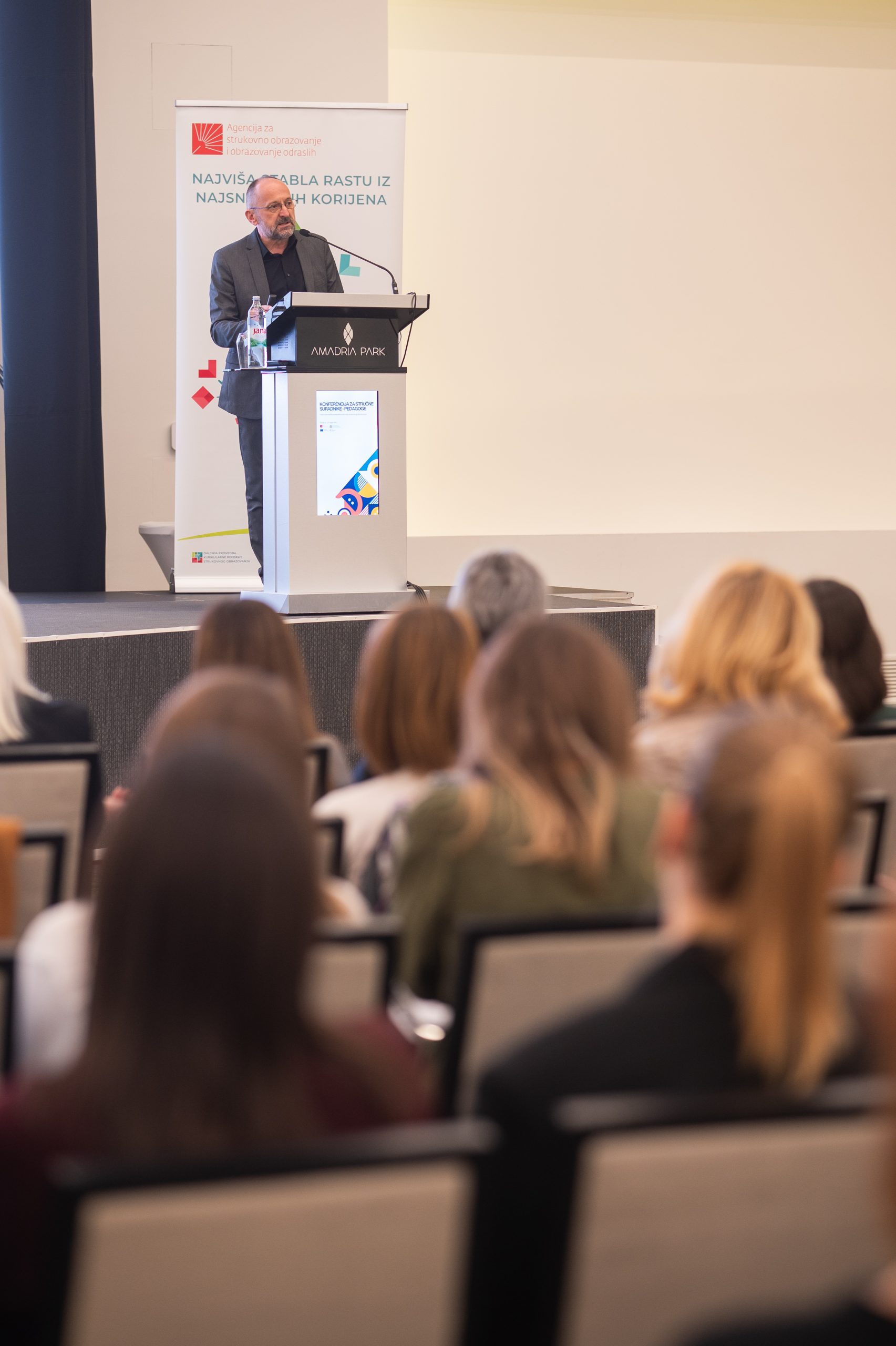
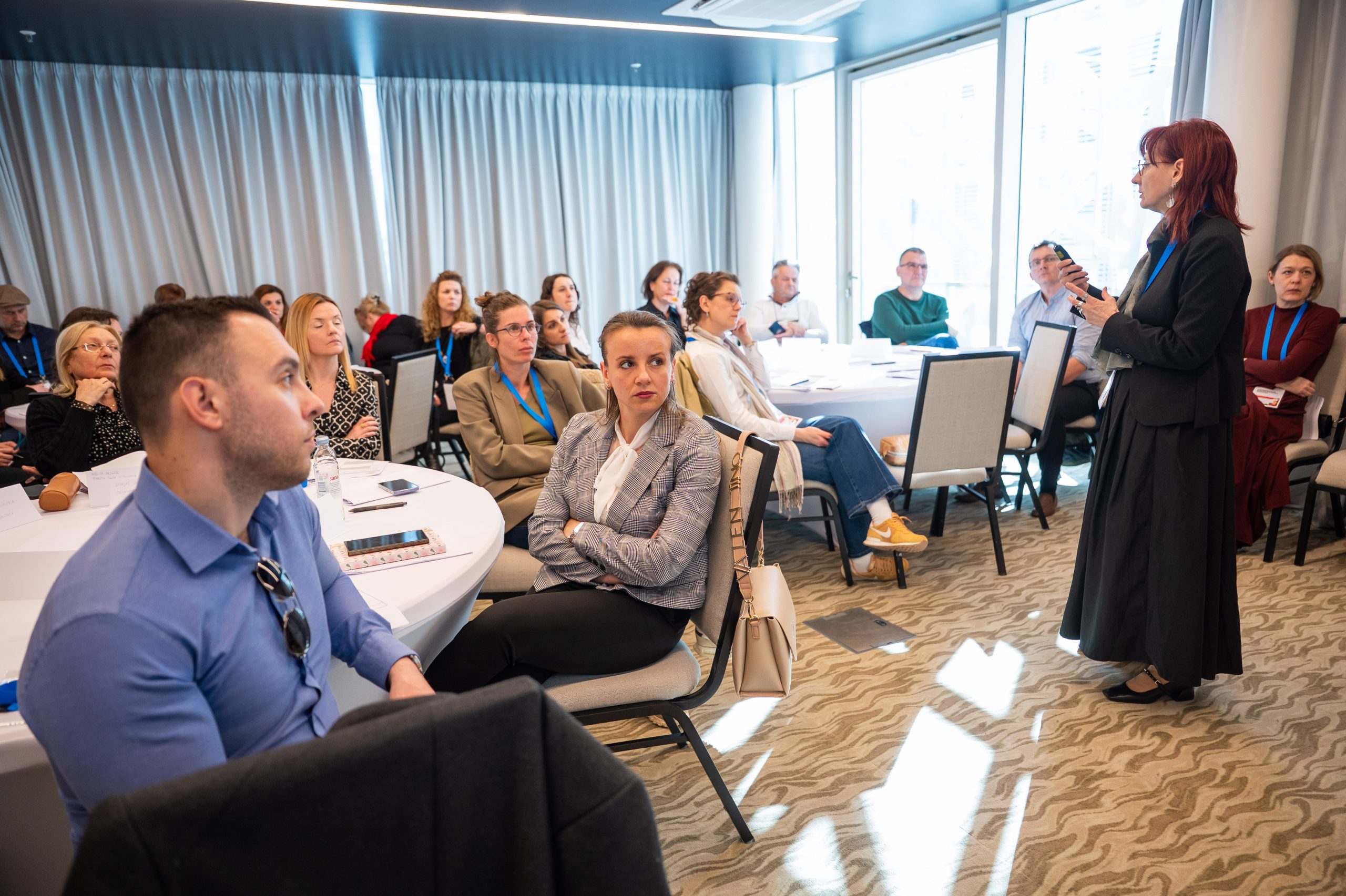
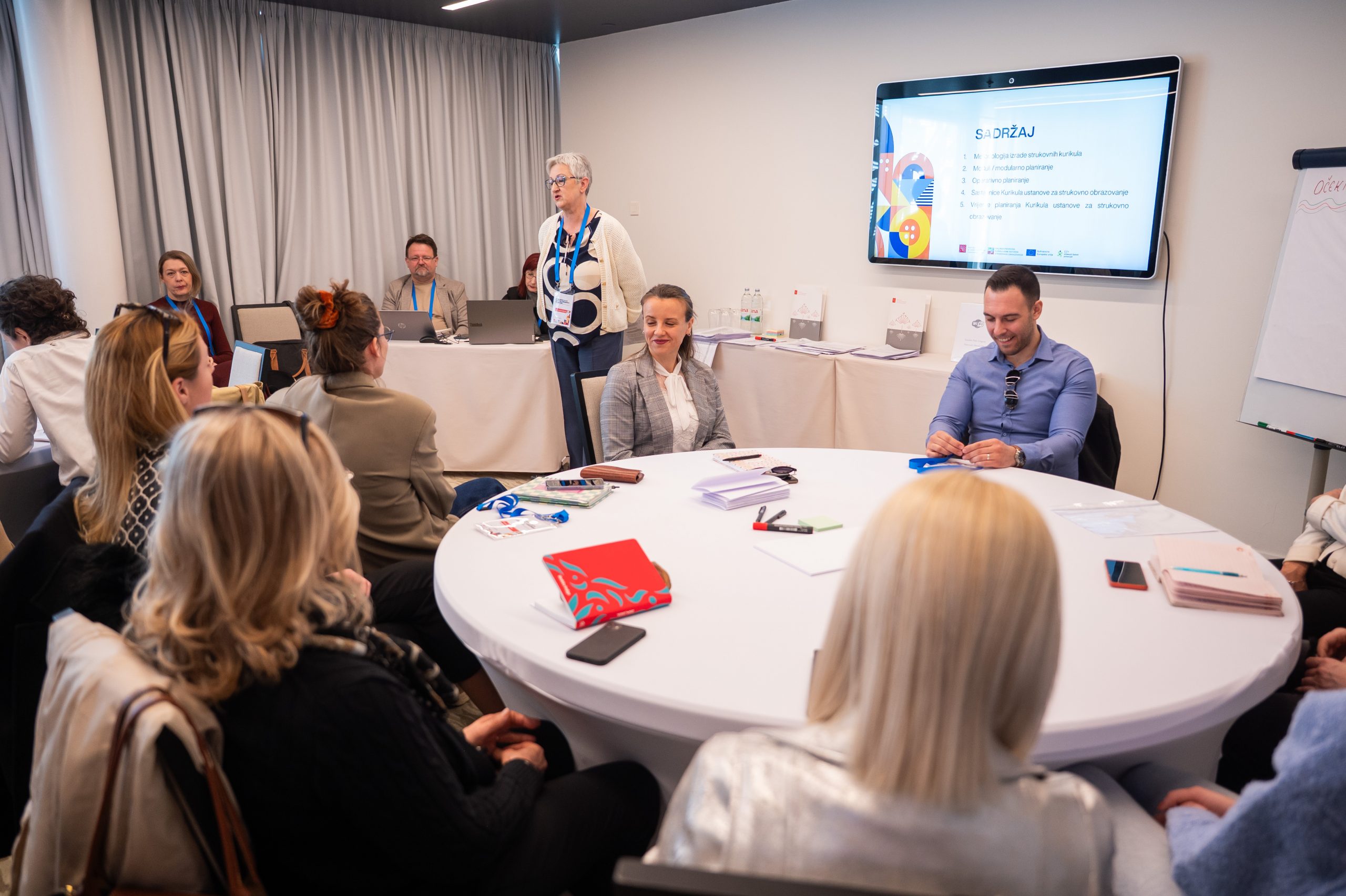
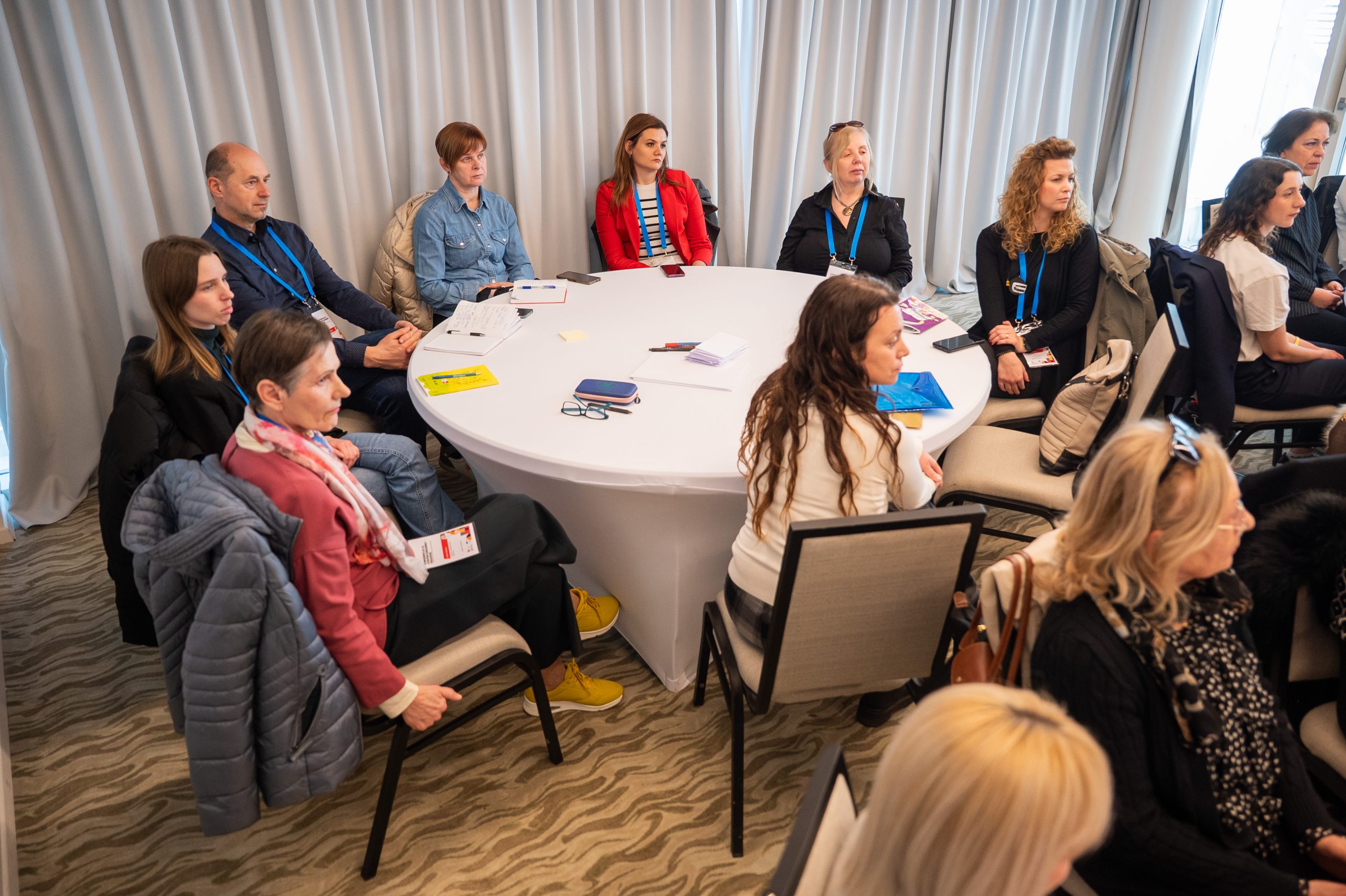
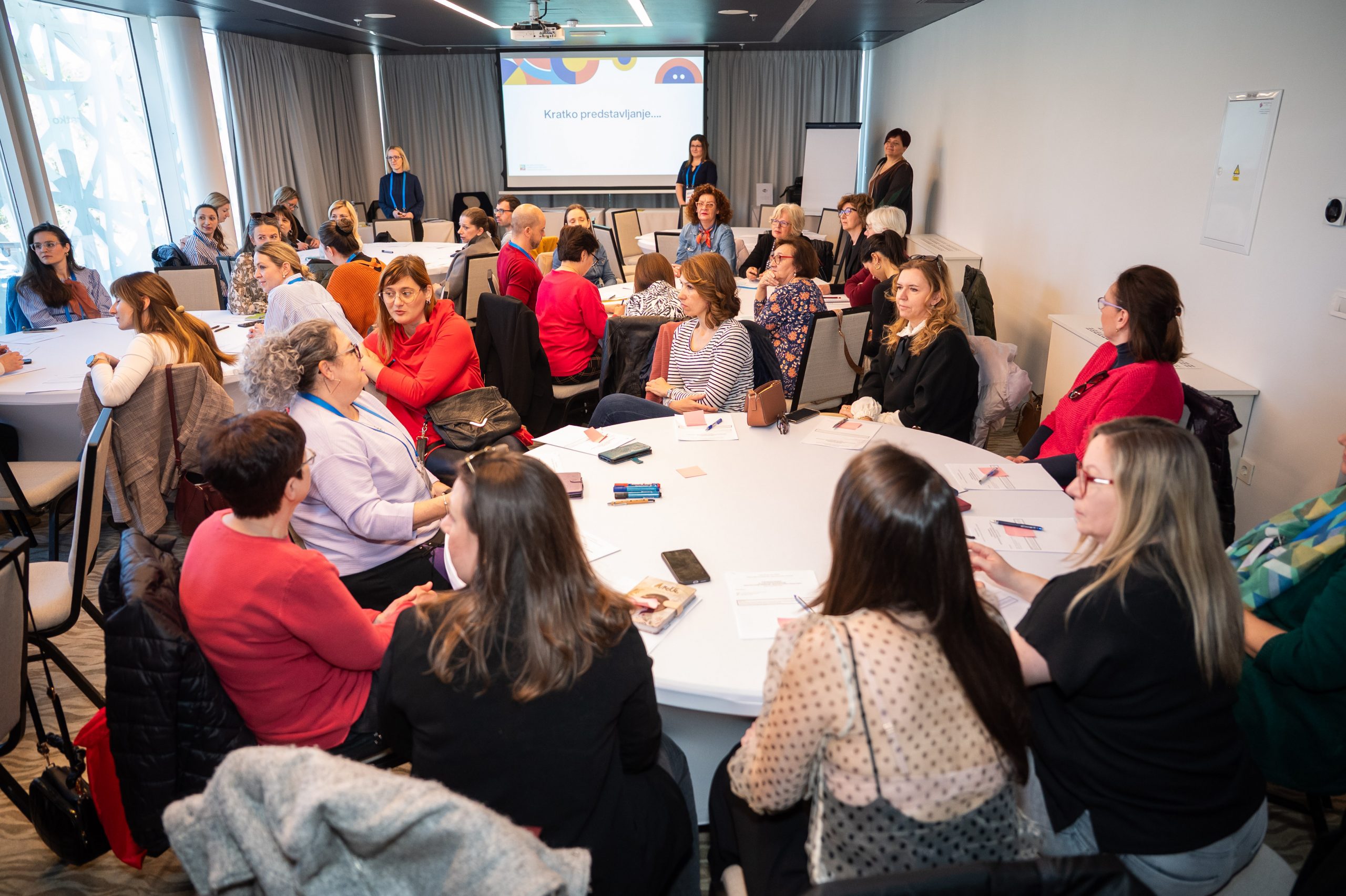
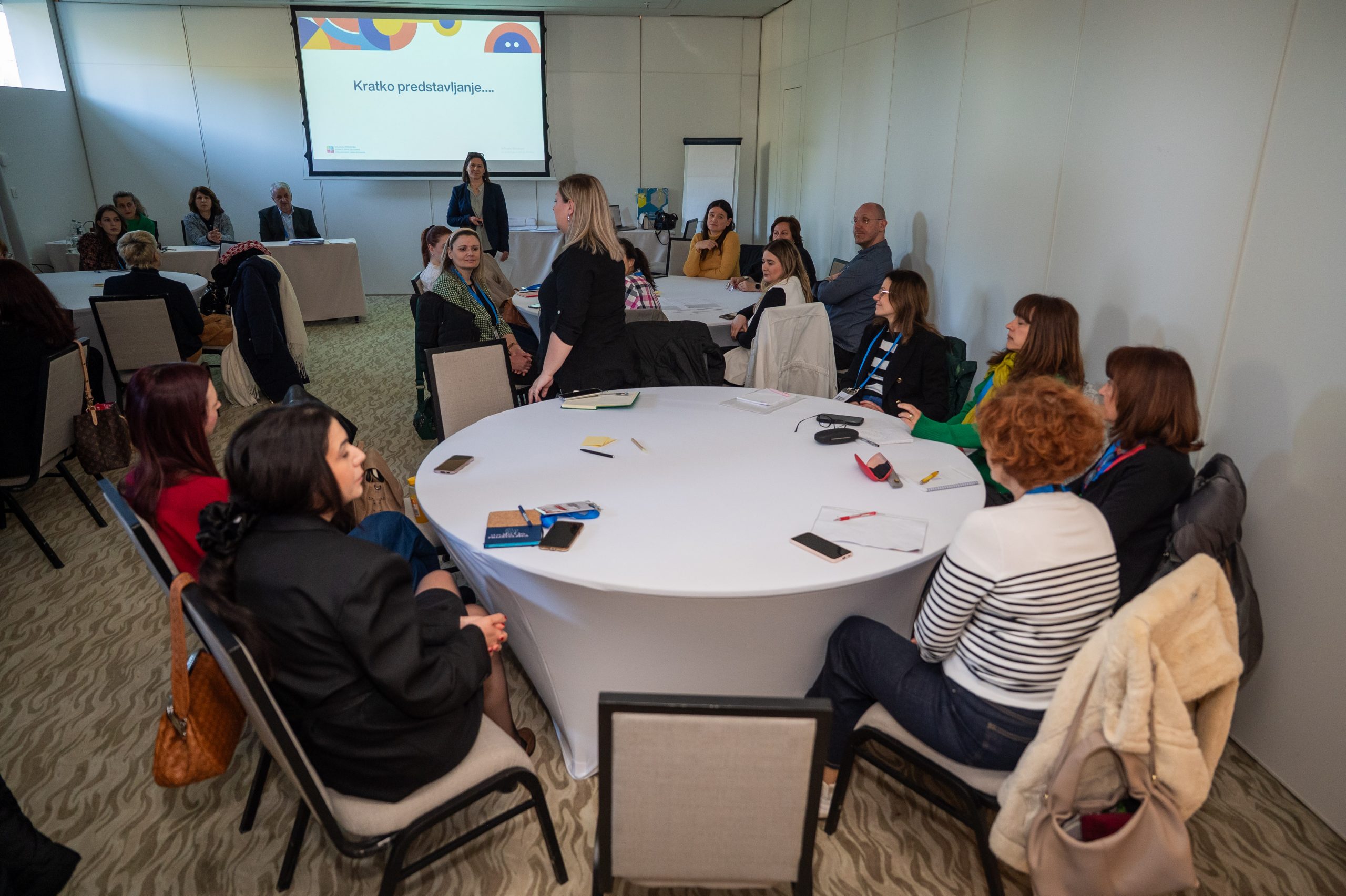
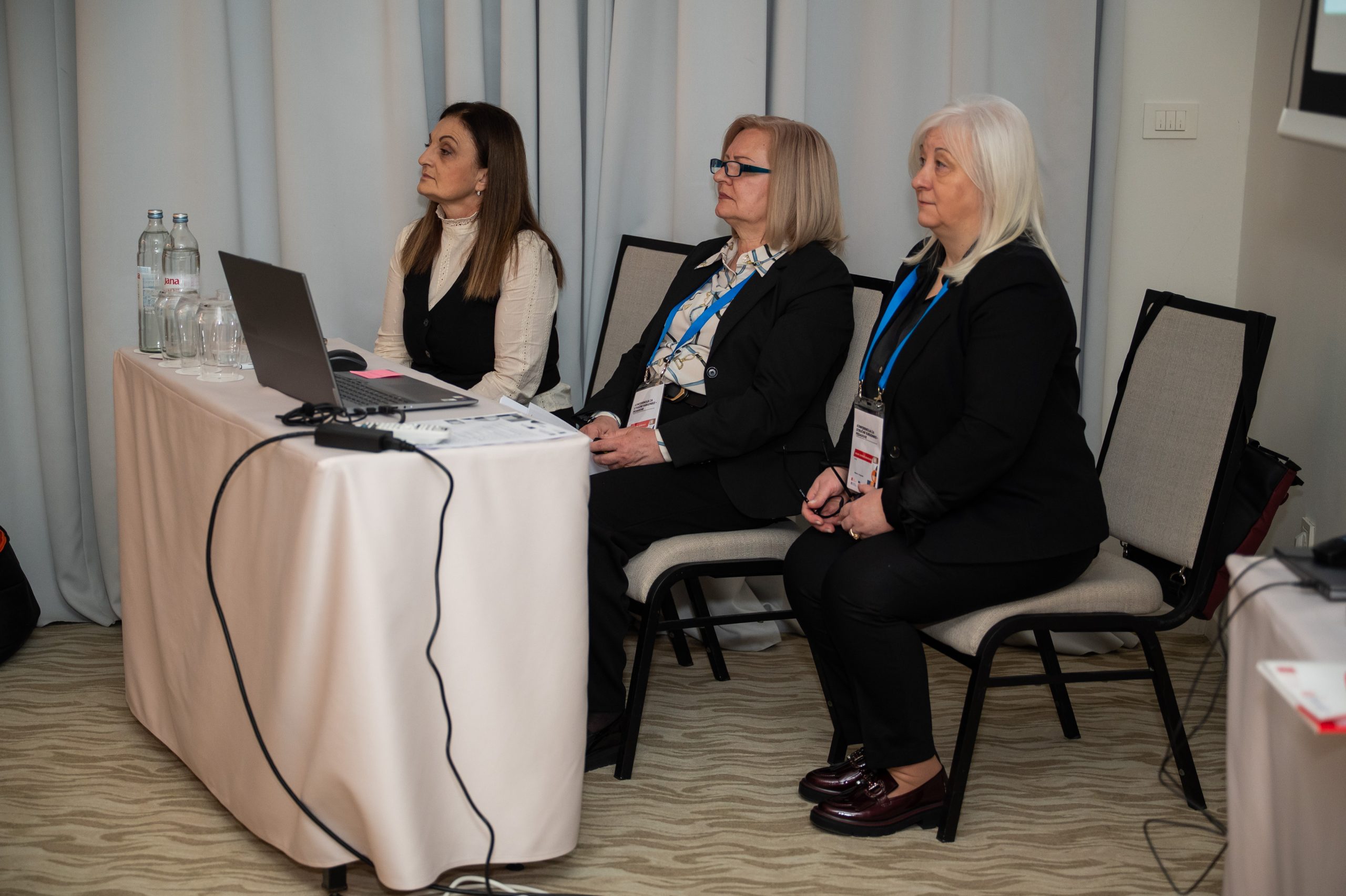
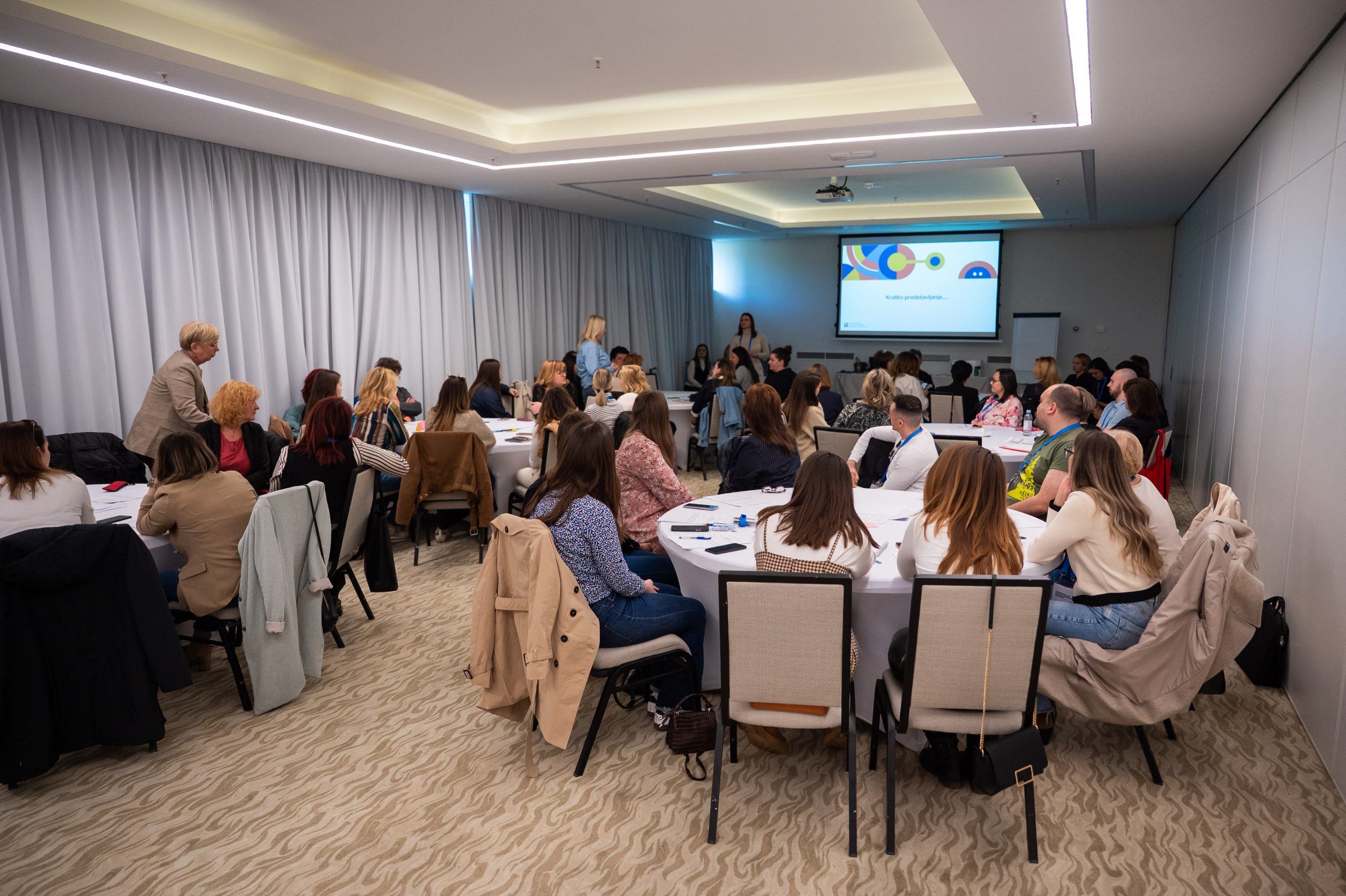
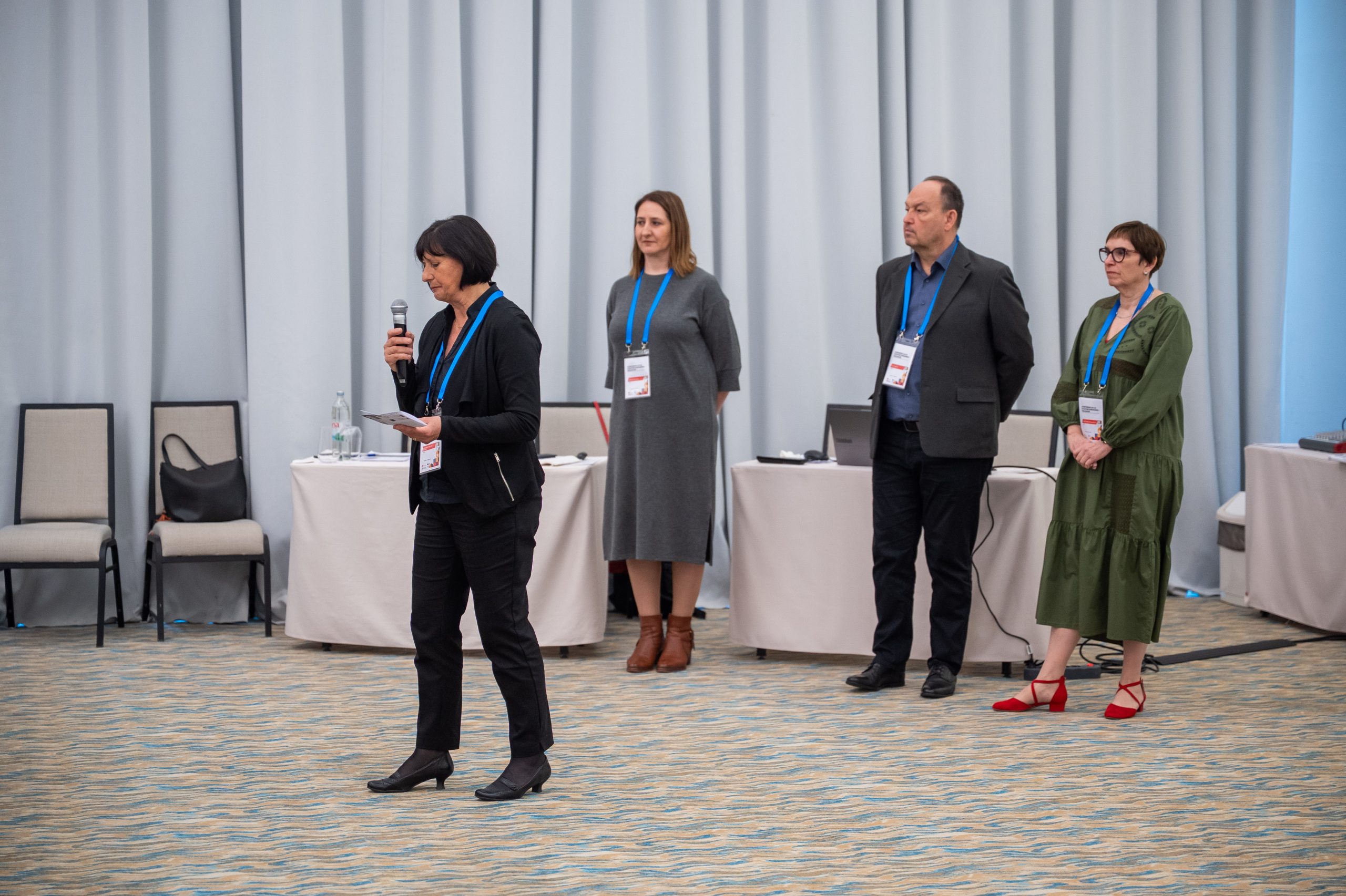
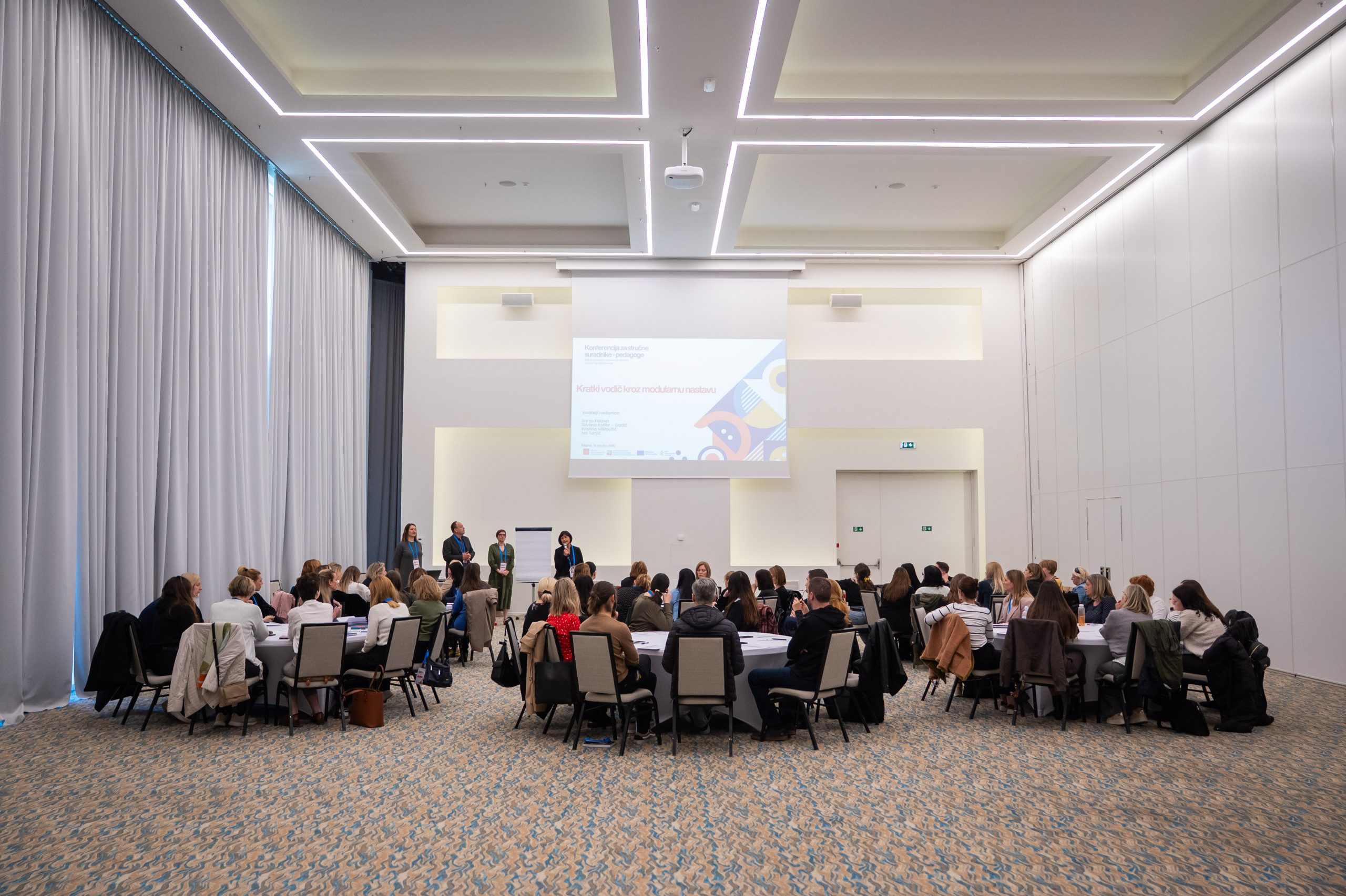
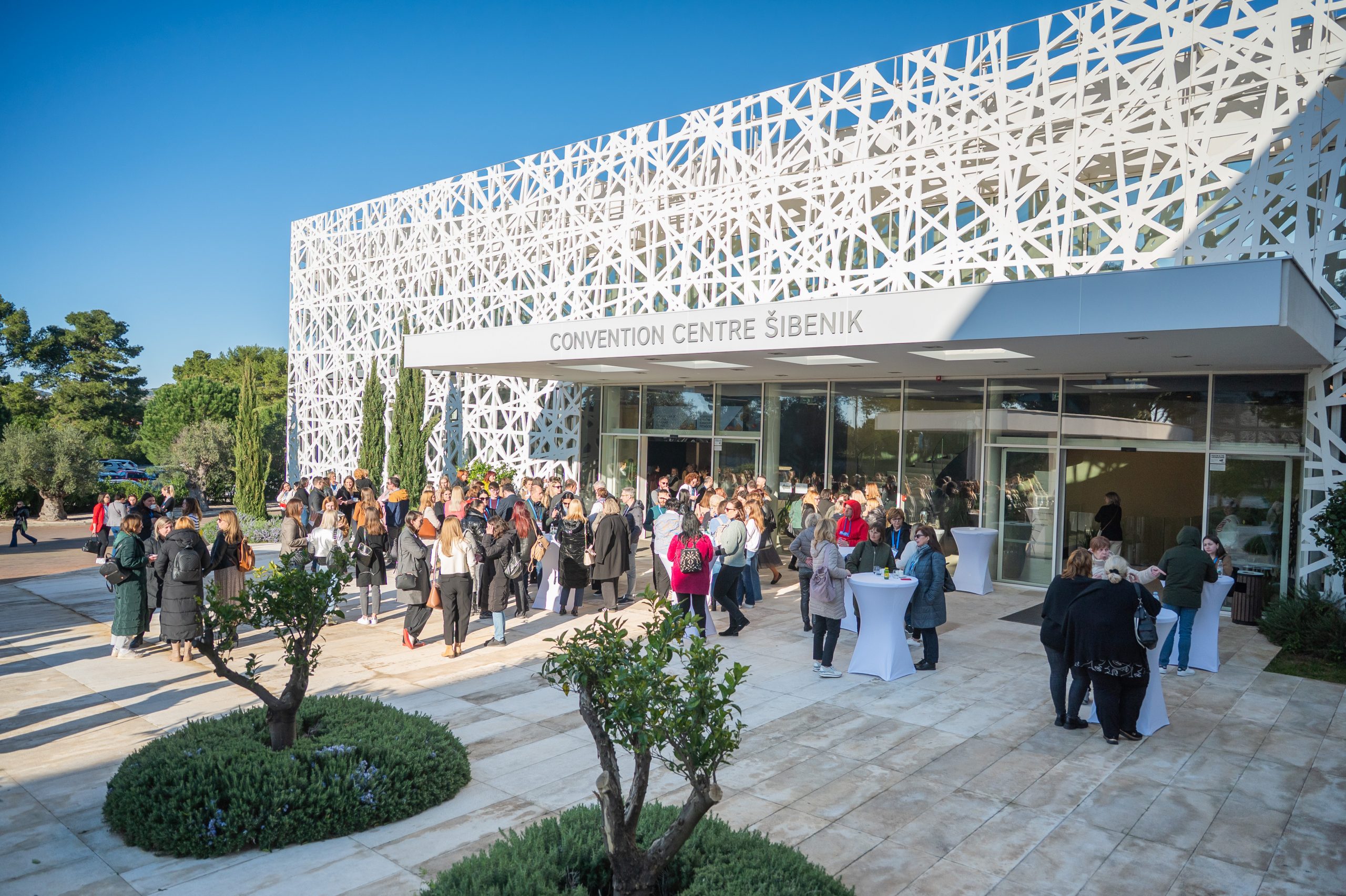
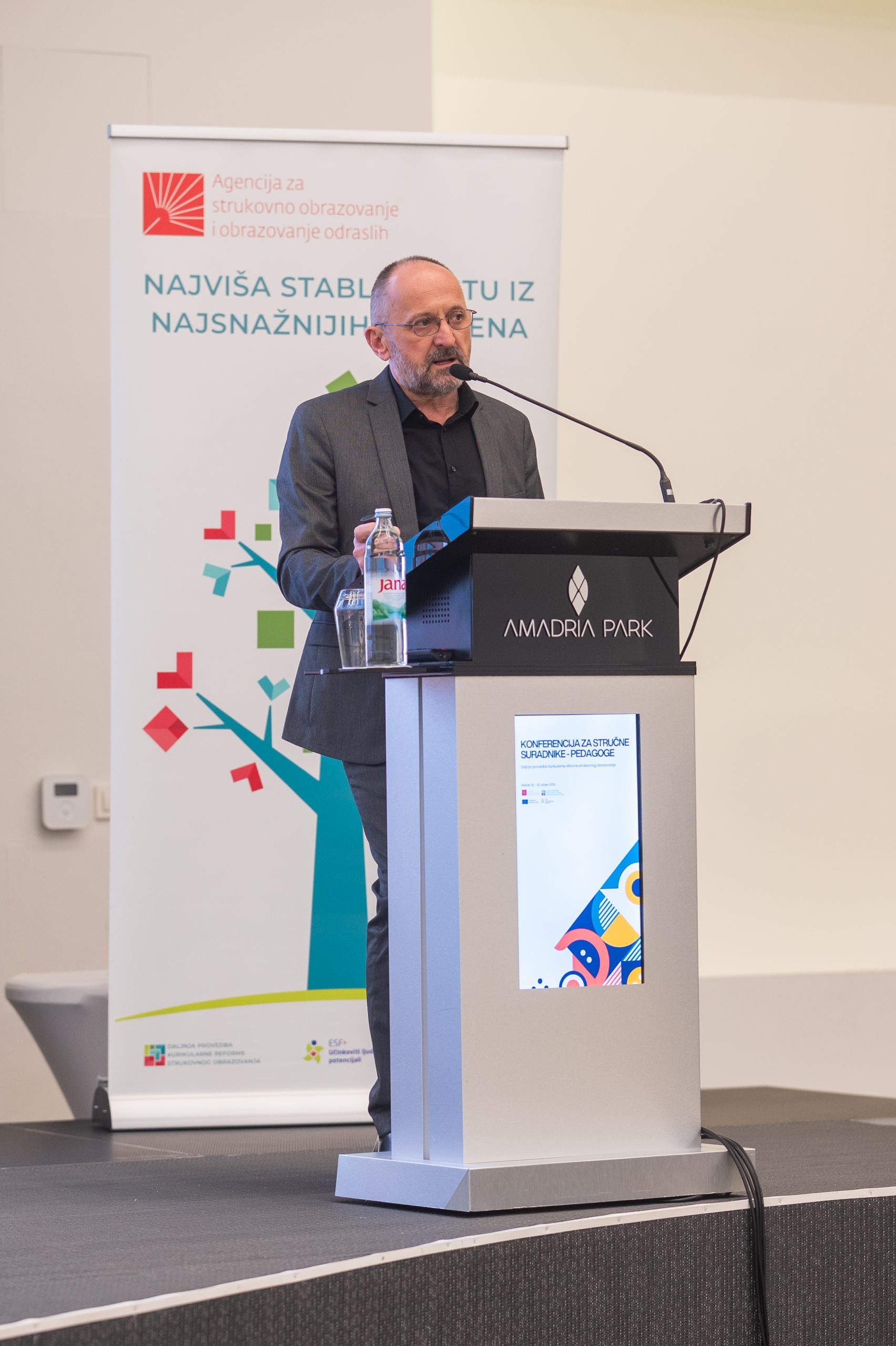
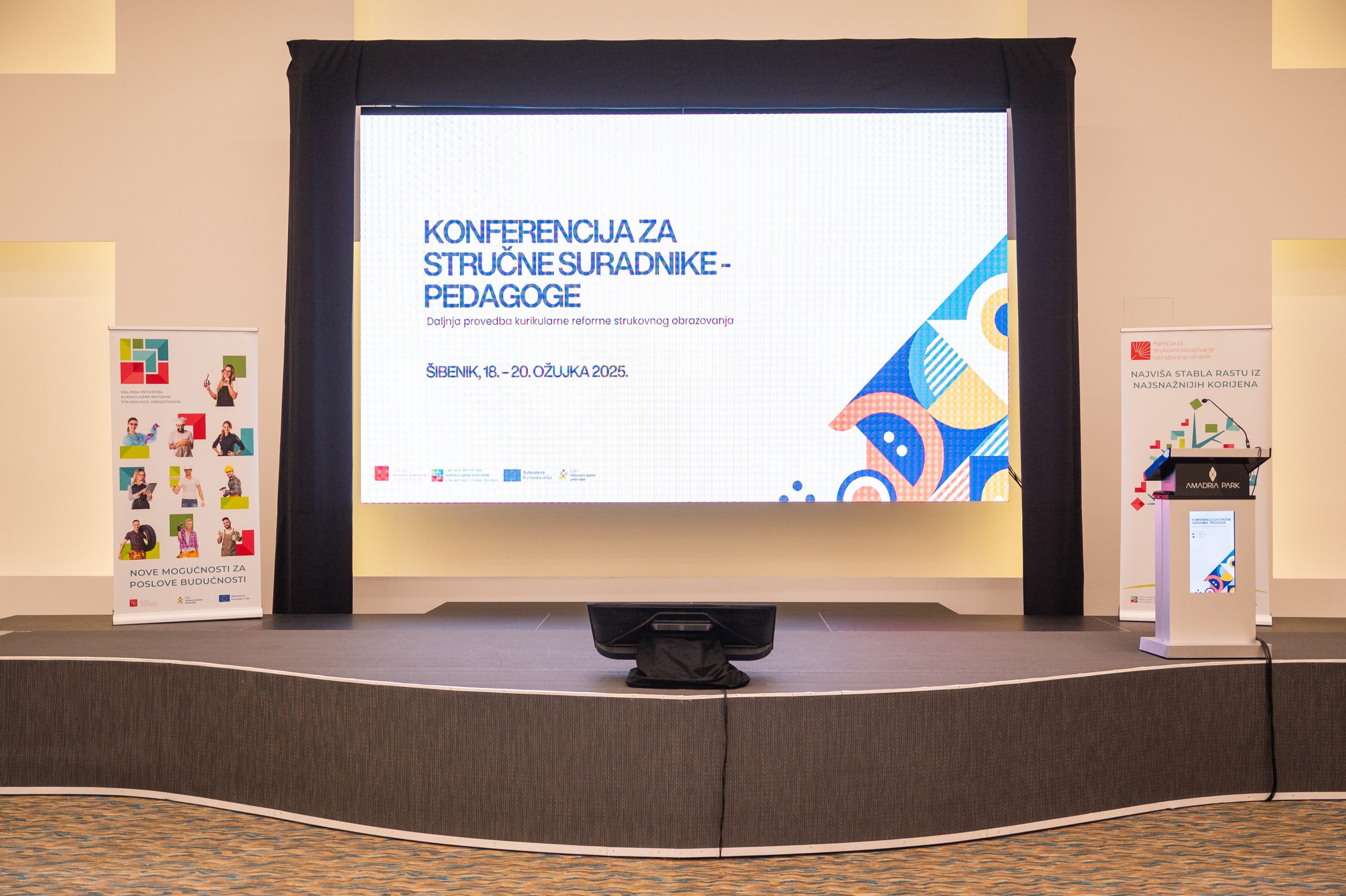
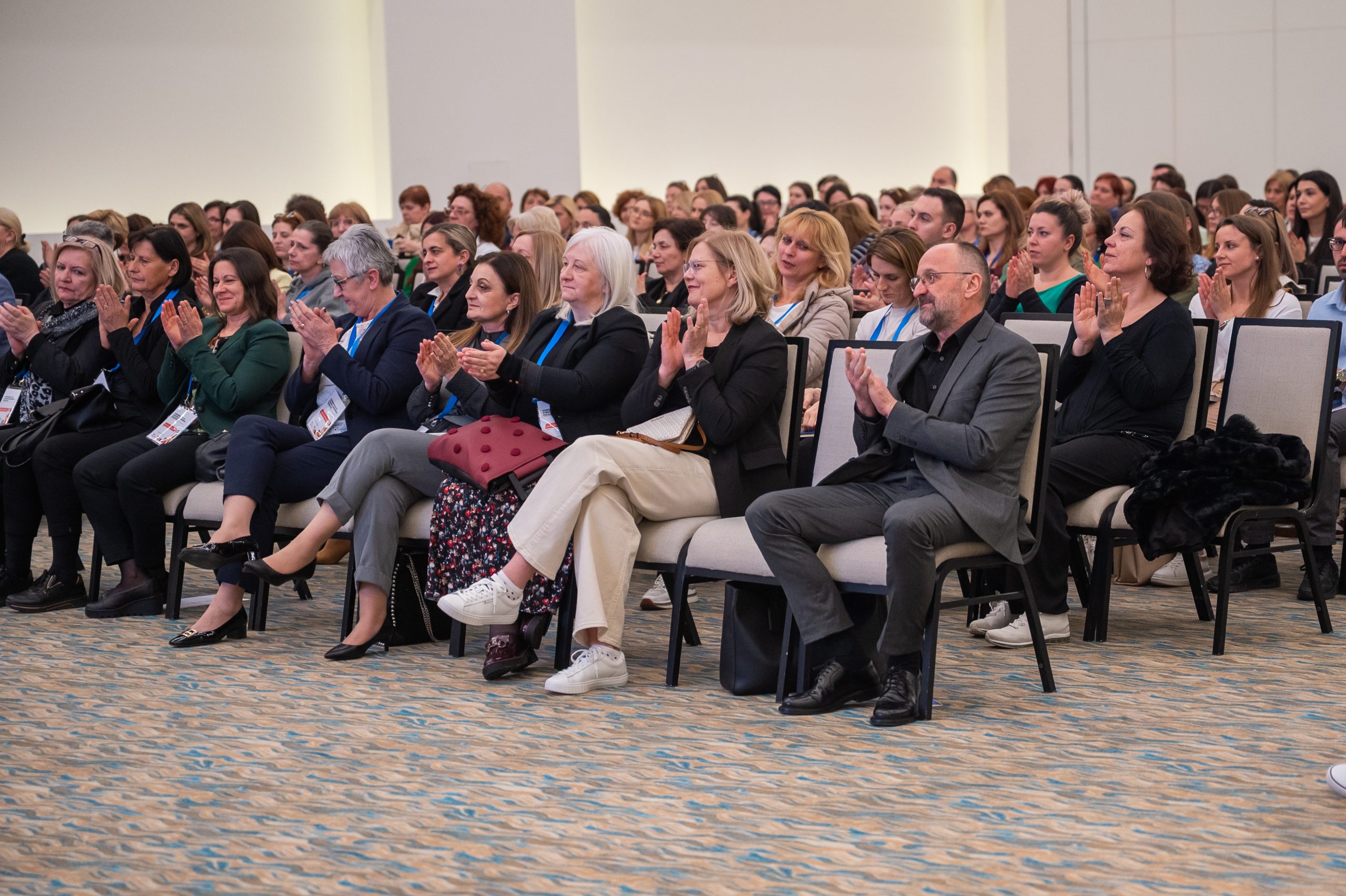
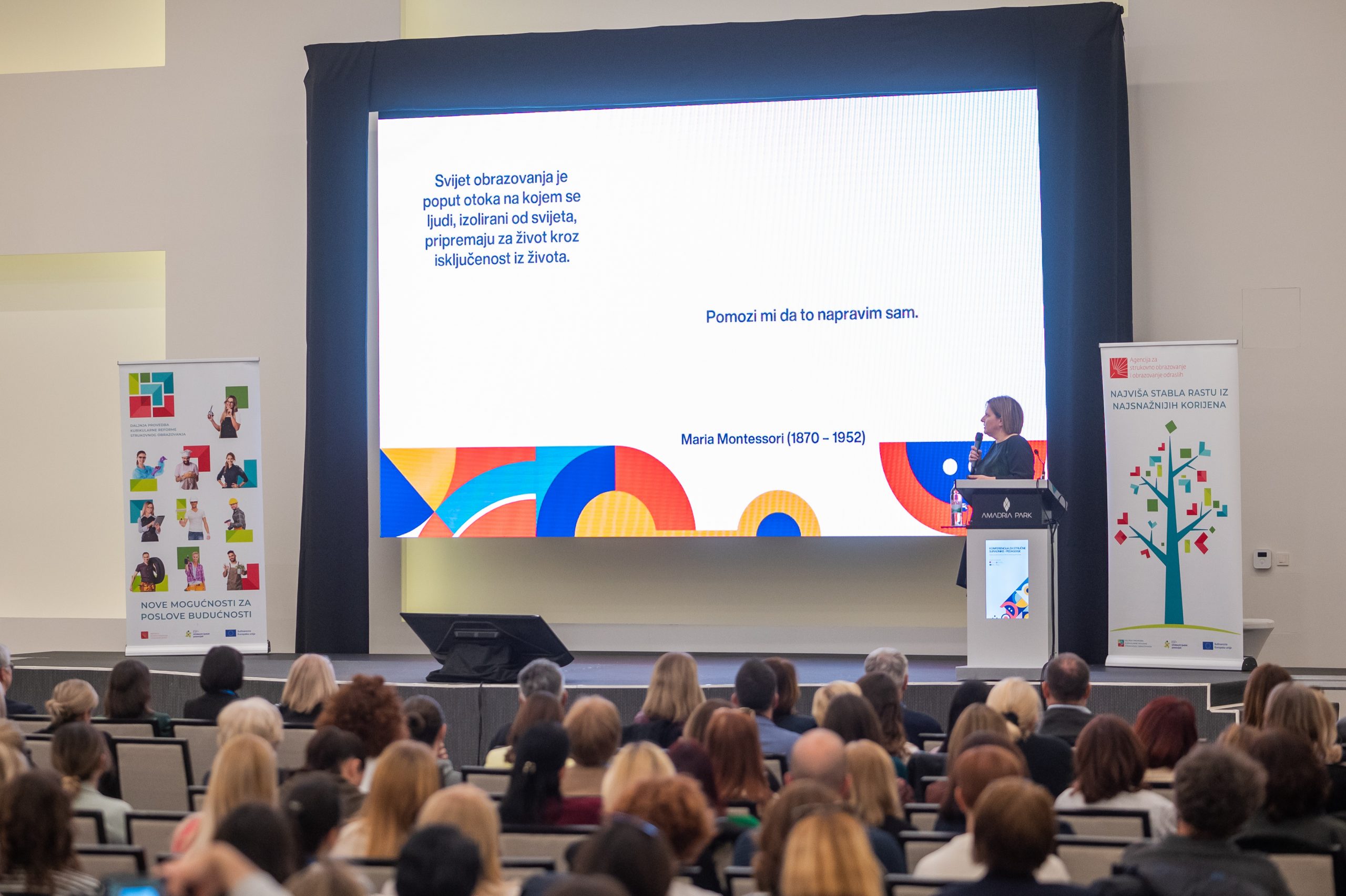
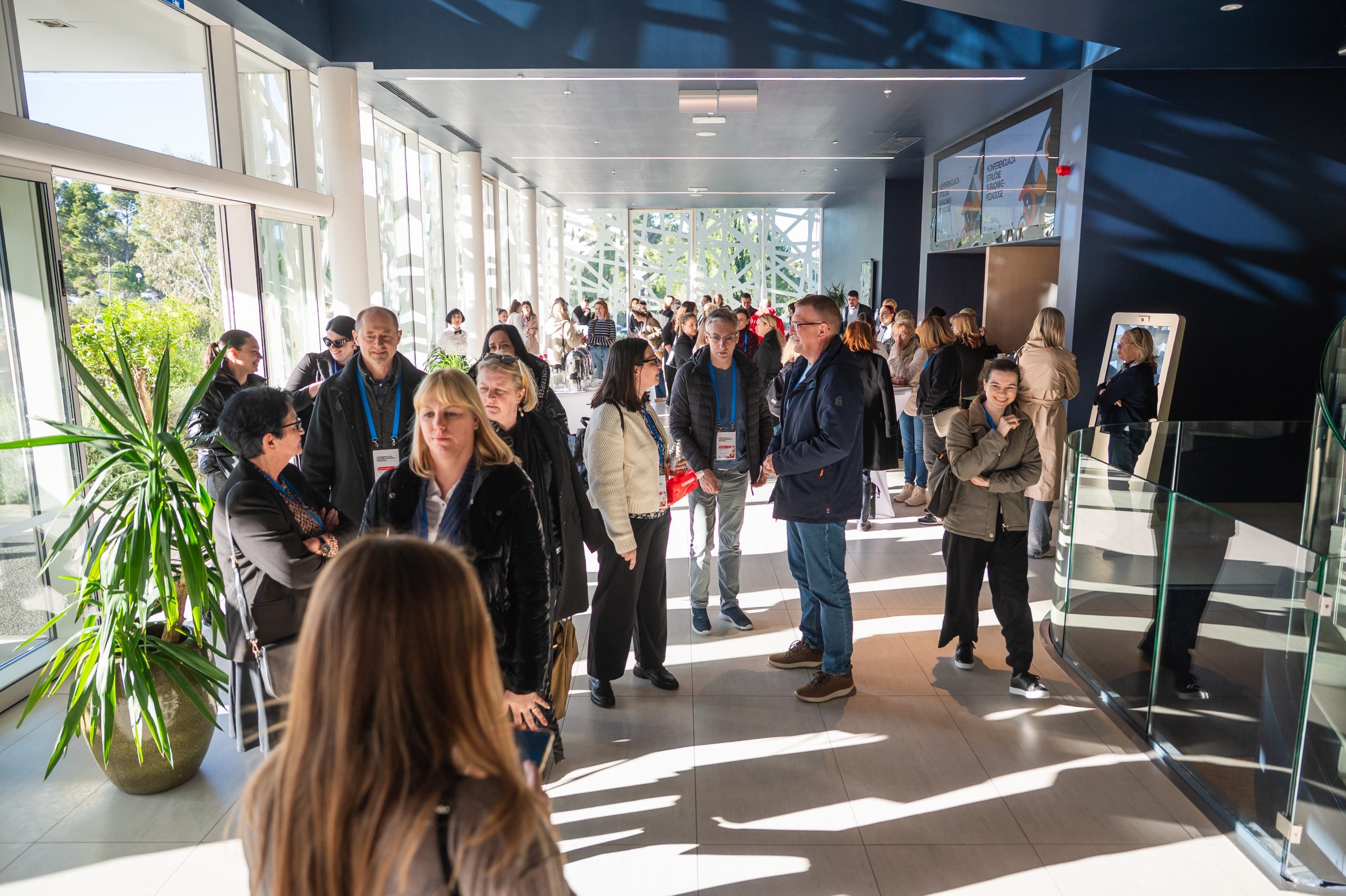
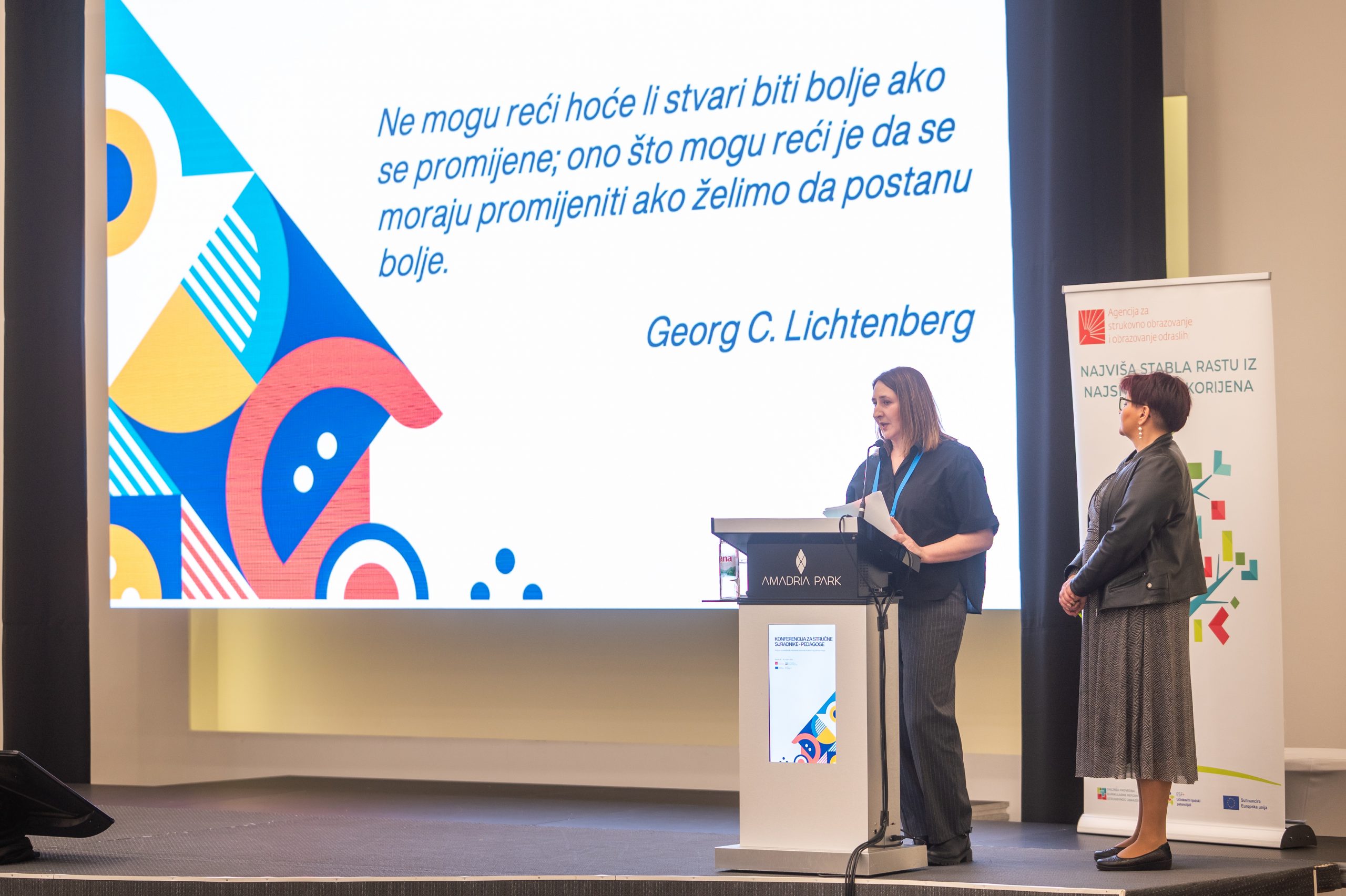
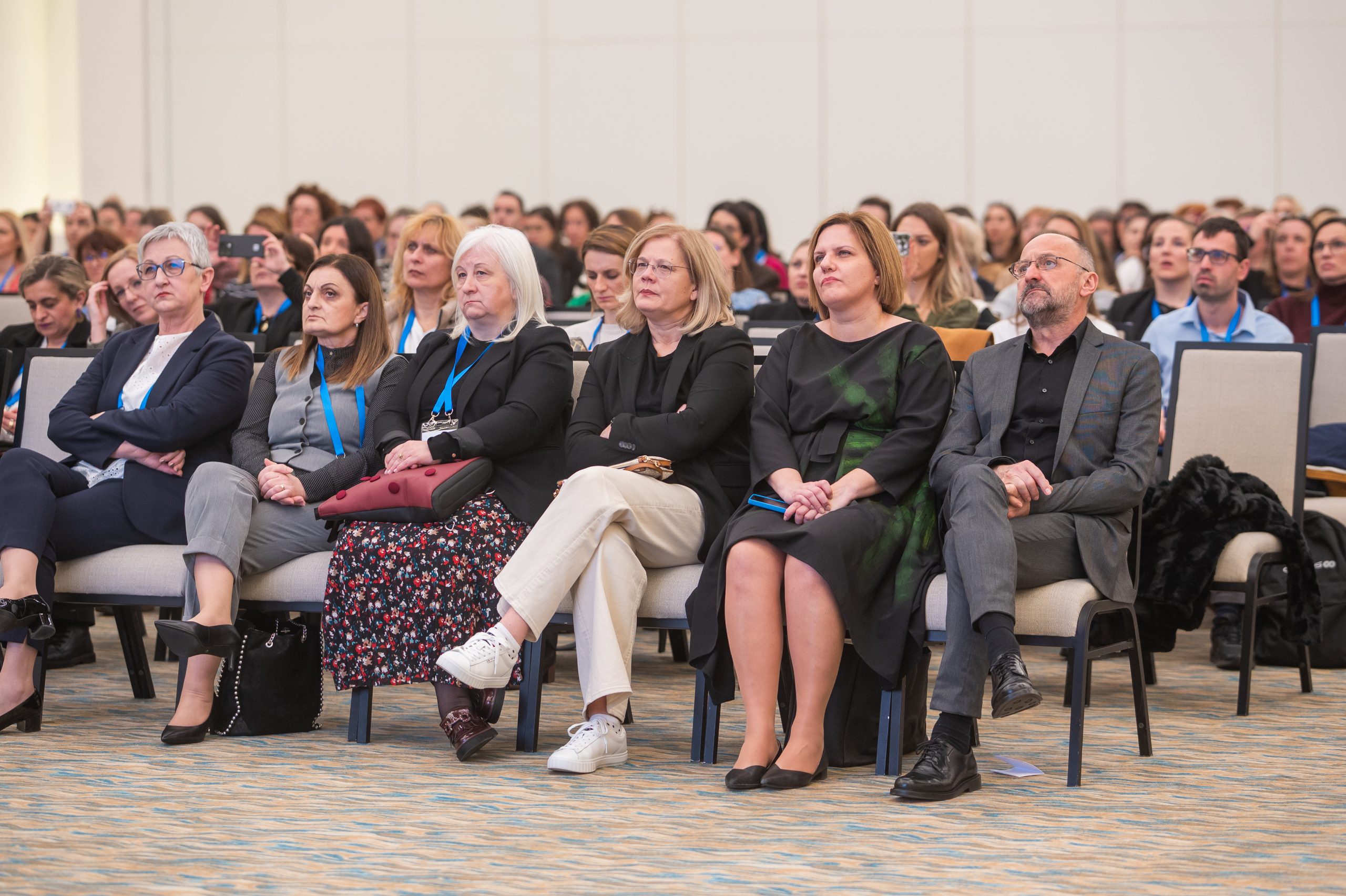
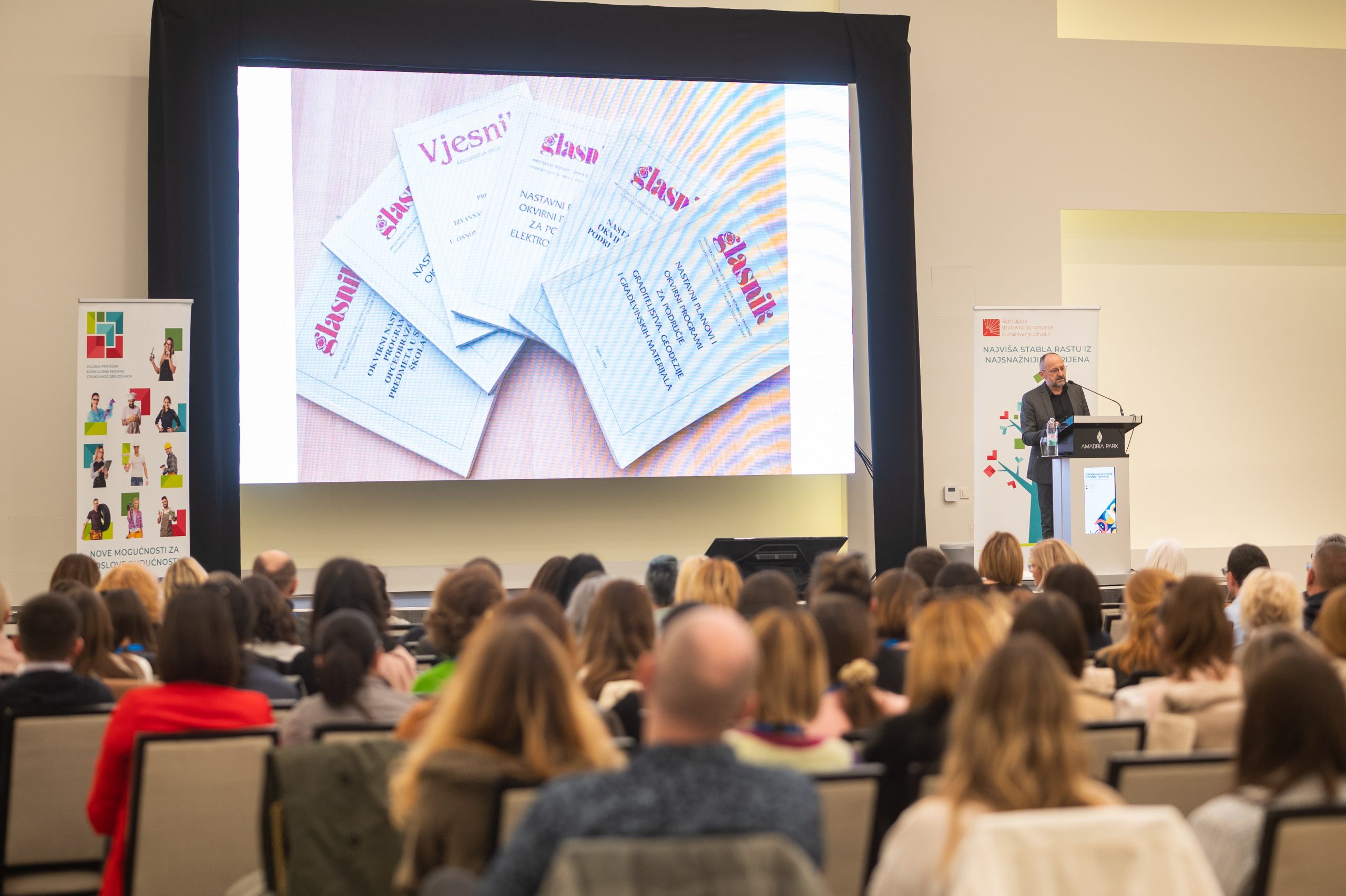
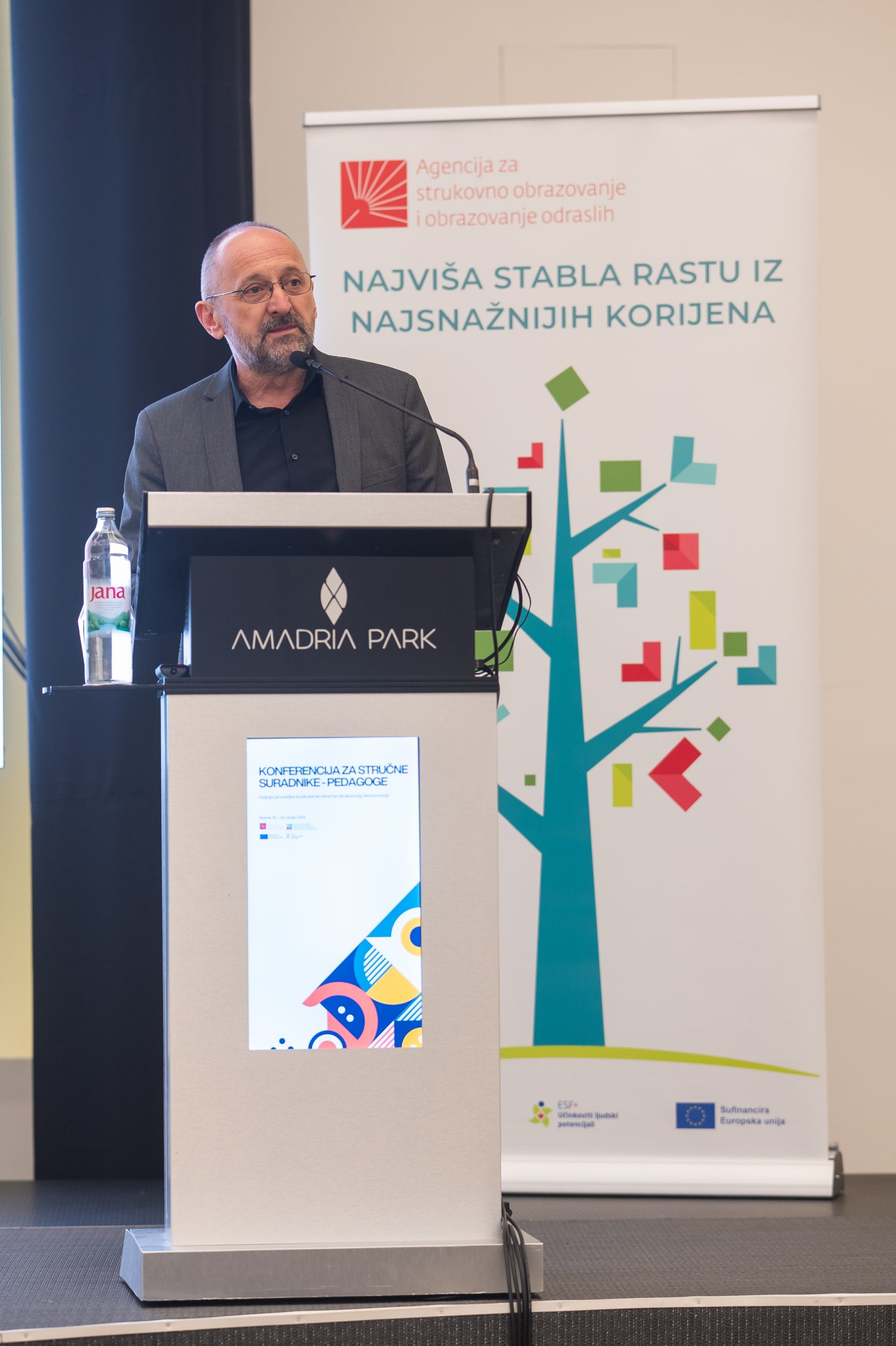
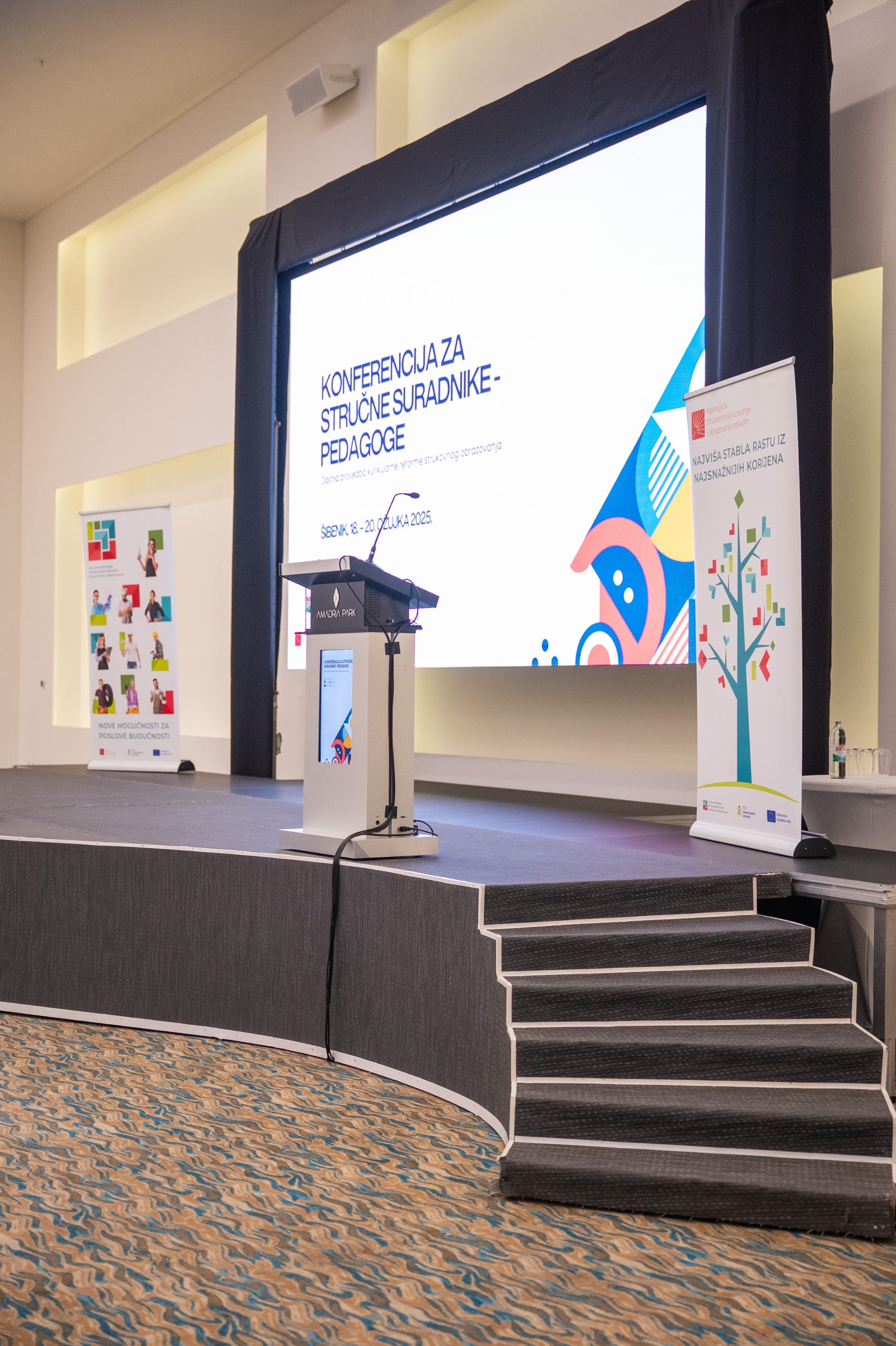
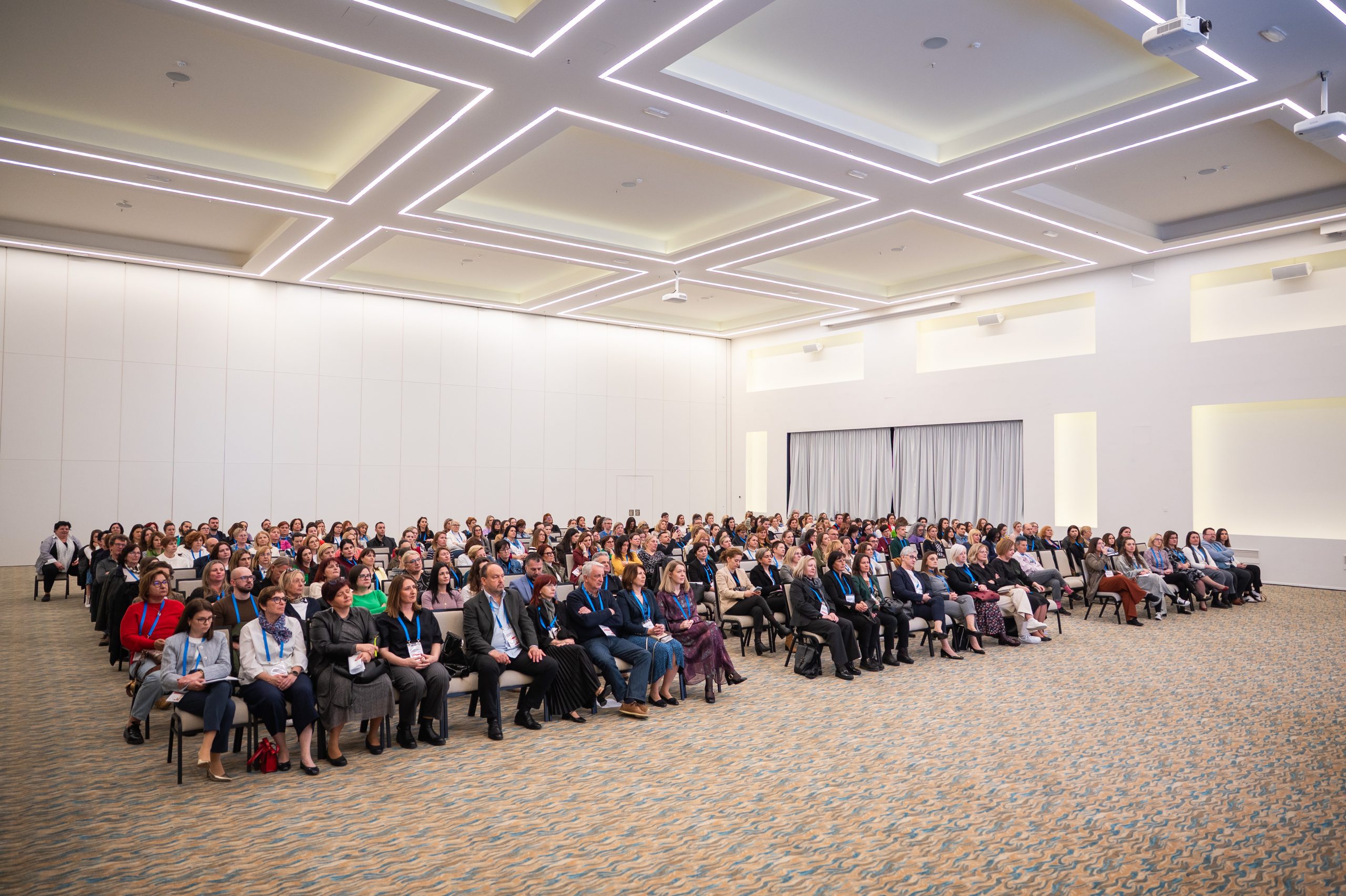
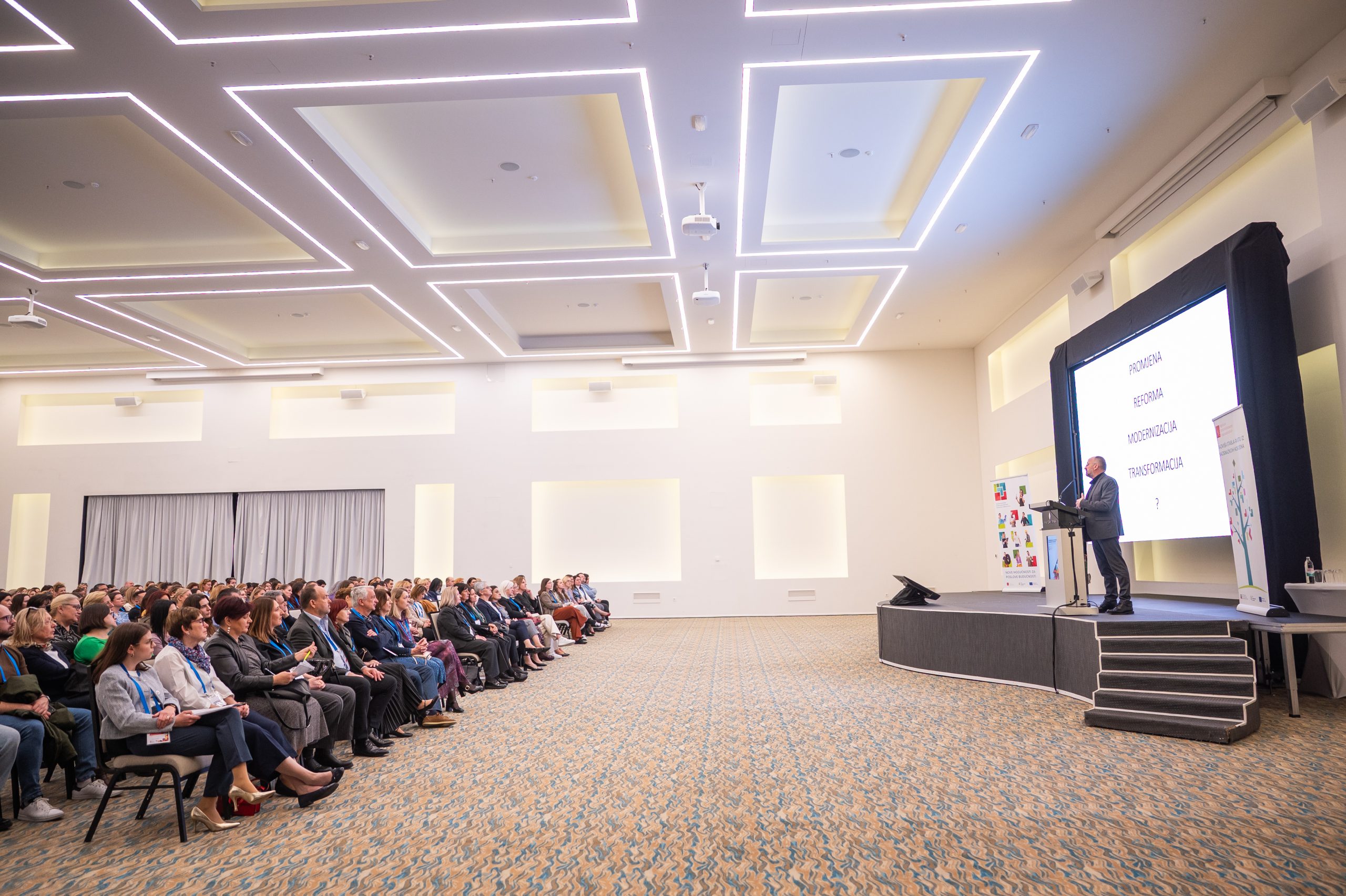
The Agency for Vocational Education and Training and Adult Education (ASOO) organized, for the first time, a gathering for professional associates – pedagogues of vocational schools in the Republic of Croatia, from 18 March to 20 March 2025, at the Amadria Park Hotels in Šibenik. With this event, the importance and role of professional associates – pedagogues in the upcoming changes in the vocational education system through the introduction of modular vocational curricula were emphasized. The new modular approach to instruction will bring changes not only in the planning, organization, and execution of the teaching and learning process, but also in the approach to planning, assessment, and support for students and teachers. Professional associates – pedagogues can make a significant contribution to designing support for students and teachers in adapting to different planning of the teaching and learning process and methods of work. The conference participants had the opportunity to exchange experiences with colleagues from other schools, discuss challenges in the implementation of modular instruction, and gain insight into different approaches and examples of good practice. Over the three days of the event, more than 200 professional associates gathered, and a total of six plenary presentations and three workshops were held, led by the Agency’s sectoral advisors. asoo.hr
Below we present summaries of the plenary presentations and the presenters’ slides:
1. Lidija Novosel – “Modular Instruction – Basic Concepts”
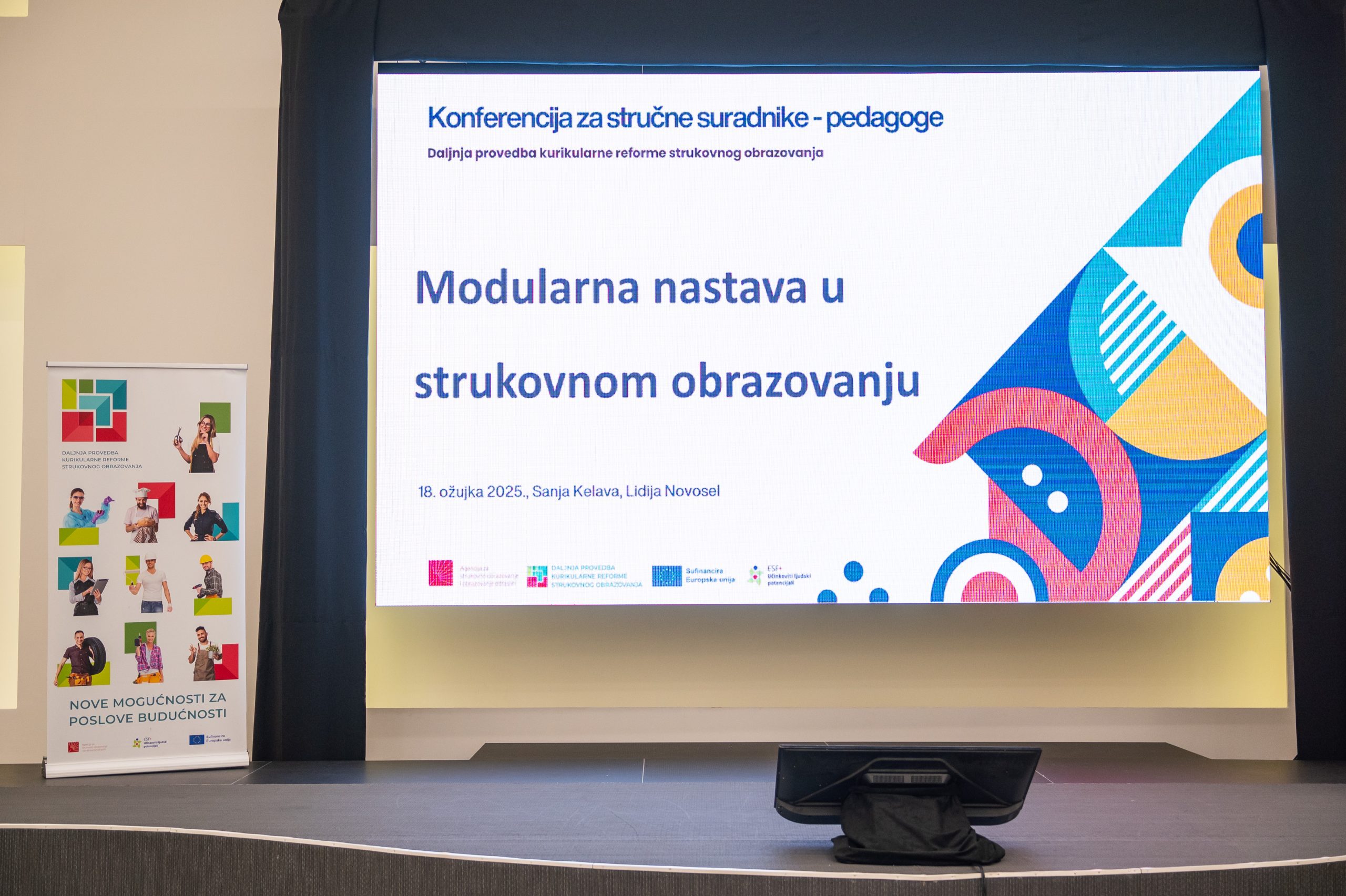
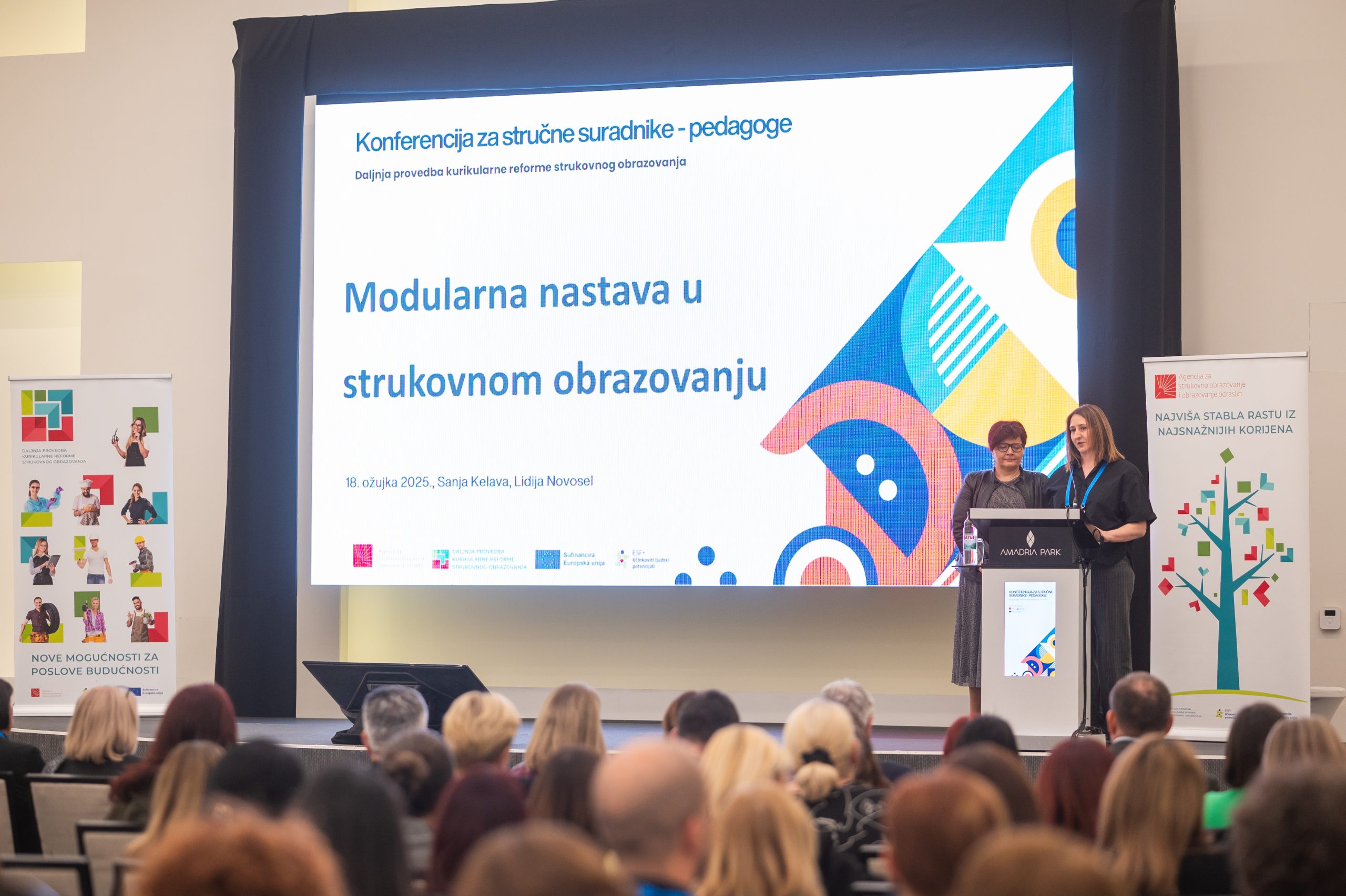
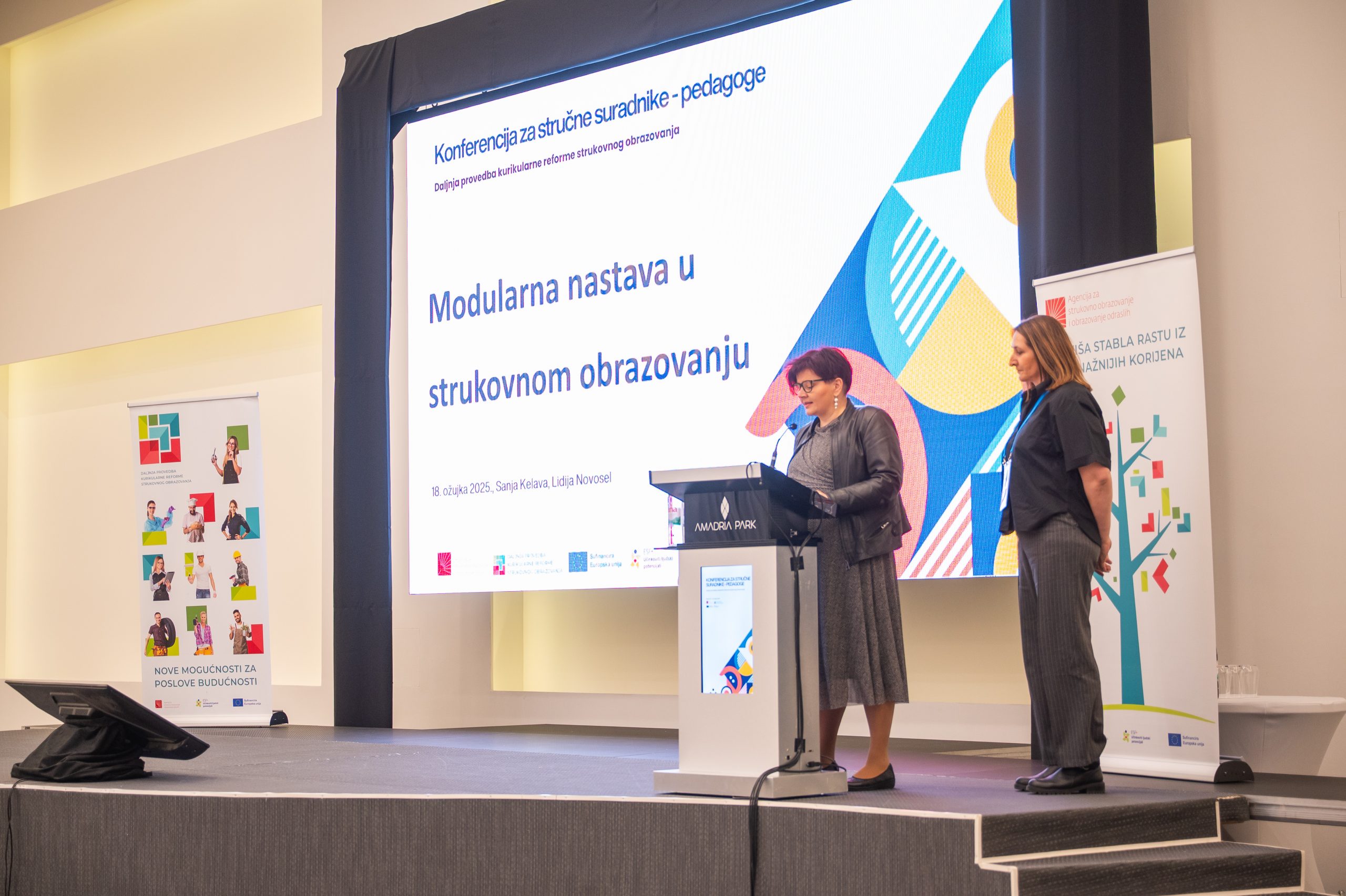
Senior Advisor Sanja Kelava and Head of the Department for Tertiary Activities Lidija Novosel introduced participants to the basic concepts of modular instruction in vocational education. Legal and strategic documents that regulate vocational education and its modernization were highlighted. Participants were introduced to key concepts such as occupational standard, qualification standard, vocational curriculum, and sectoral curriculum. The methodology for planning modules and defining sets of learning outcomes (LOs) was presented, as well as the Croatian Credit System for Vocational Education (CSVET), which enables comparison with the European Qualifications Framework (EQF). Ultimately, participants received a comprehensive insight into the concept of modular instruction, with particular emphasis placed on the flexibility and adaptability of modular instruction for students and the labour market.
Modularna nastava u strukovnom obrazovanju Lidija Novosel
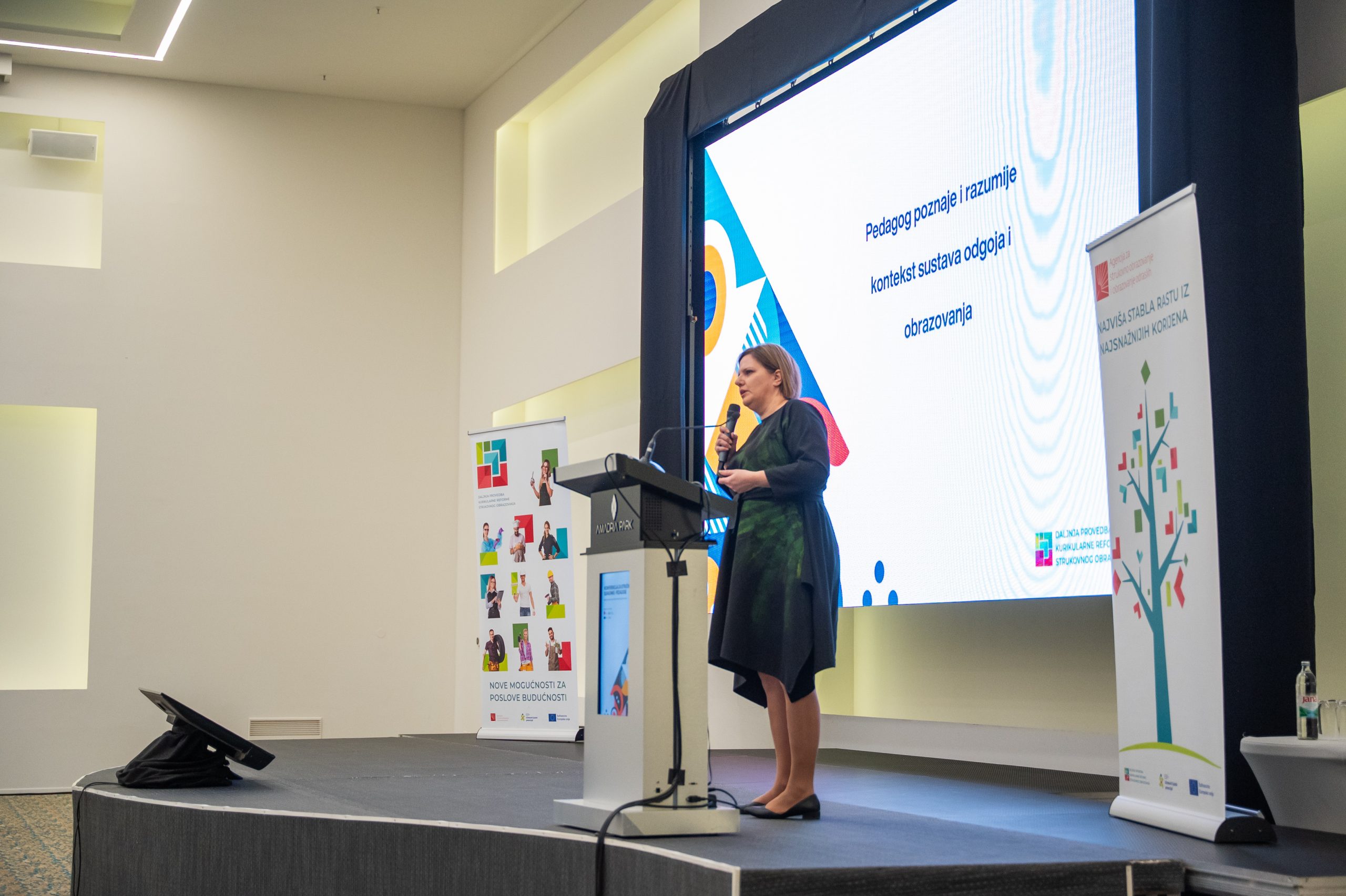
2. Assoc. Prof. Dr. Morana Koludrović – “The Role of the Pedagogue in Implementing Modular Instruction”
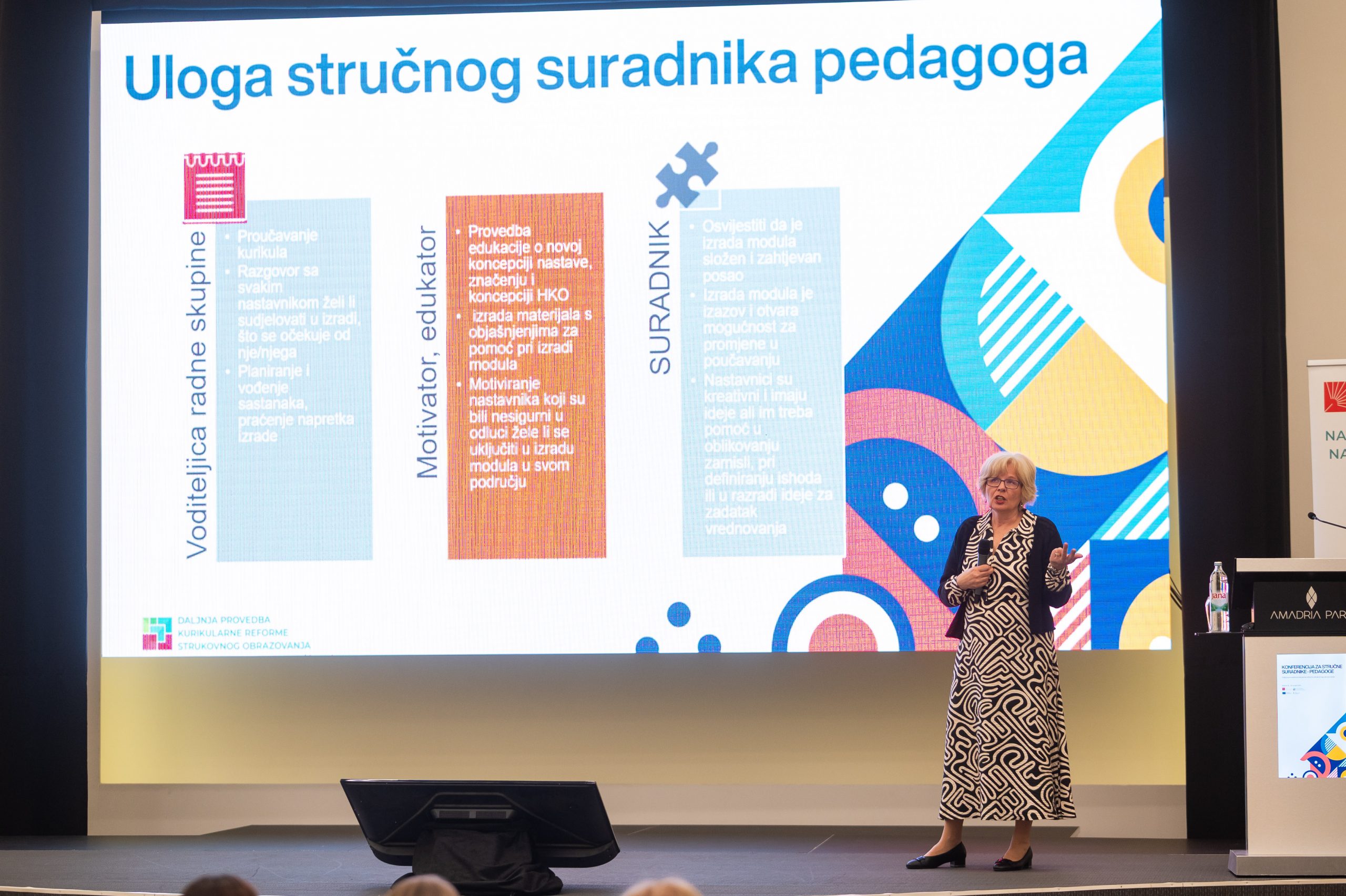
In her presentation, Assoc. Prof. Dr. Morana Koludrović presented the key aspects of curricular reform in vocational education with an emphasis on modular instruction and the role of the pedagogue in its implementation. She emphasized that the pedagogue has a central role in organizing and delivering educational work, cooperating with various stakeholders, handling administrative tasks, and ensuring and improving the quality of the education system. The advisory and mentoring role of the pedagogue comes into particular focus in the reform process, where they help both teachers and students adapt to new methods of work.
It was also emphasized that modular instruction is based on long-standing pedagogical insights and the active participation of students in the learning process. Compared to traditional methods, the modular approach allows for greater flexibility, individualization, and clearly defined learning outcomes. However, the implementation of modular instruction also brings certain challenges, including adapting schedules, resistance from some teachers to change, and the need for better cooperation. Despite this, the advantages of modular instruction are manifold, Koludrović explained: reducing discipline problems, increasing the school’s visibility, easier monitoring of student and teacher progress, and the development of competencies that are aligned with the contemporary needs of the labor market. The primary task of the pedagogue is to ensure quality support for teachers and students, facilitate the transition to modular instruction, and encourage the development of an education system that is student centered. Thus, the pedagogue, as the heart of the educational institution, plays a key role in this process, because it is through their knowledge and actions that the goals of the reform and the improvement of teaching quality are realized.
Uloga pedagoga u implementaciji modularne nastave, Morana Koludrović
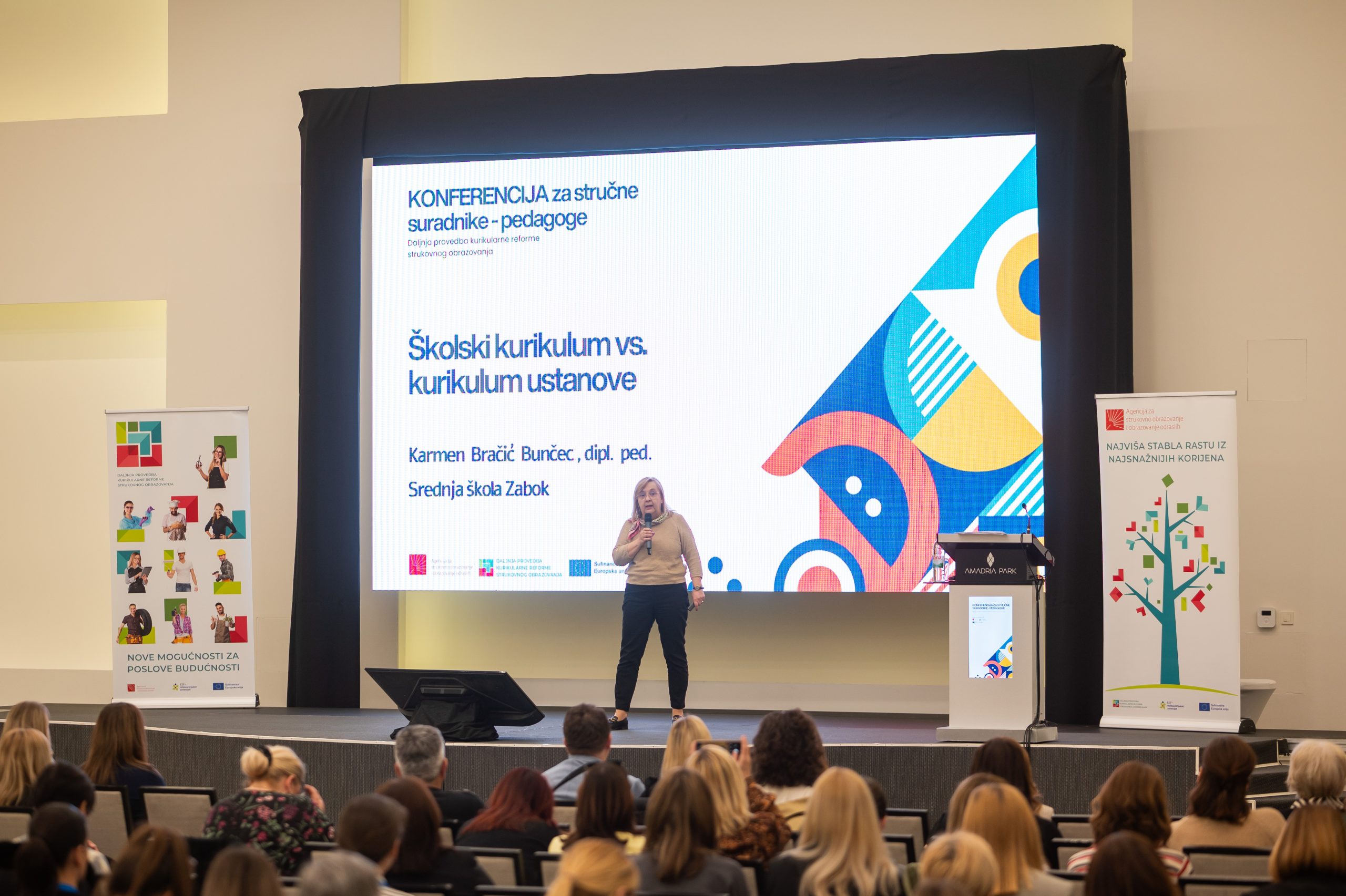
3. Karmen Bračić Bunčec – “Institutional Curriculum vs. School Curriculum”
In her presentation, pedagogue Karmen Bračić Bunčec discussed the difference between the school curriculum and the institutional curriculum in the context of vocational education. The school curriculum is based on the national curriculum and includes long-term and short-term plans, while the institutional curriculum elaborates in detail the educational process specific to a particular school, including the school’s identity, elective modules, and cooperation with the economy. Using the example of the Secondary School Zabok, the steps in developing the institutional curriculum were demonstrated, the adaptation of vocational education to market needs, and the connection between general education and vocational subjects through project activities. Challenges were highlighted, such as adapting to changes and ensuring quality, as well as the advantages of flexibility and school recognition through specific programs.
Kurikulum ustanove vs. školski kurikulum, Karmen Bračić Bunčec
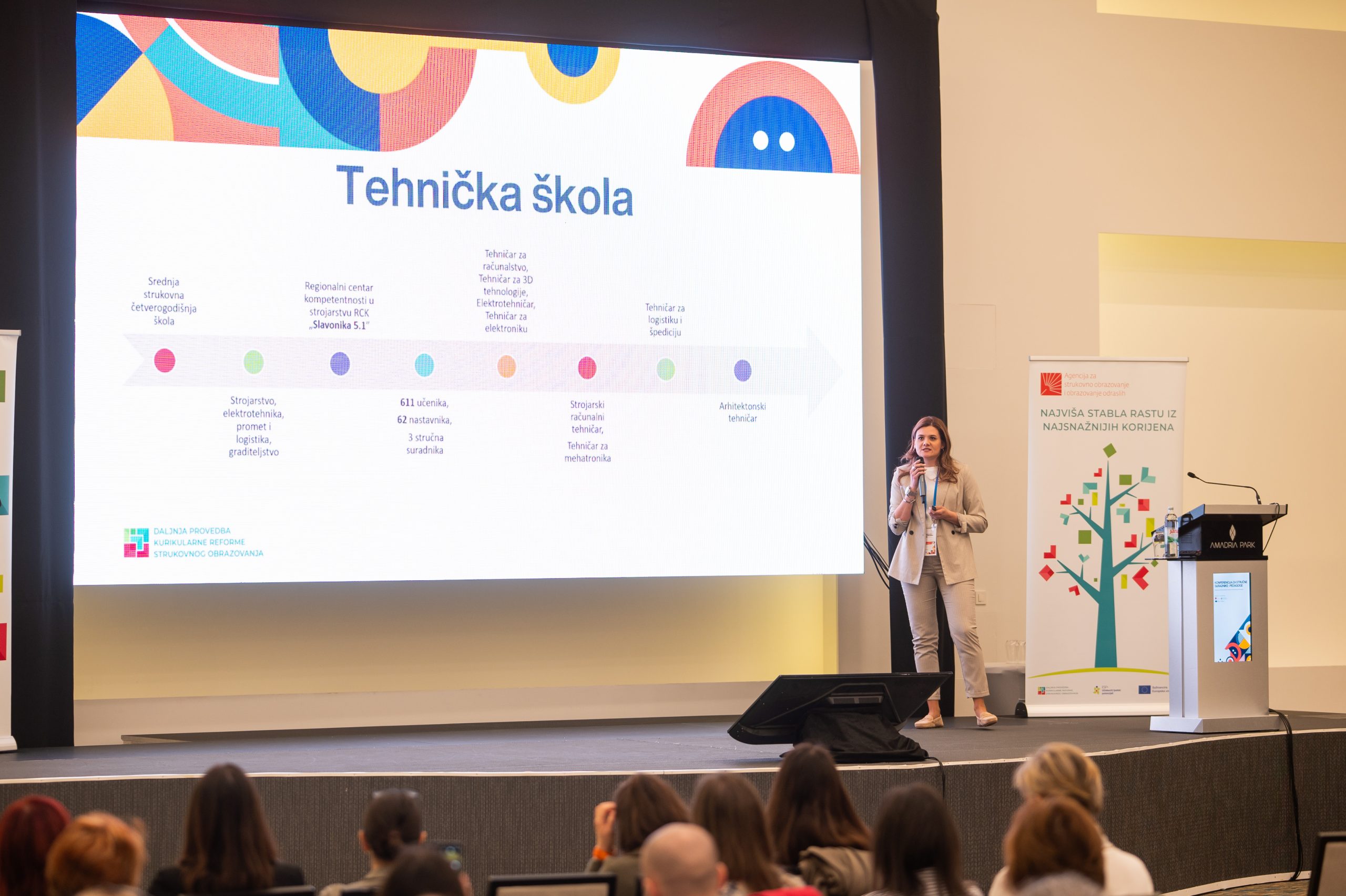
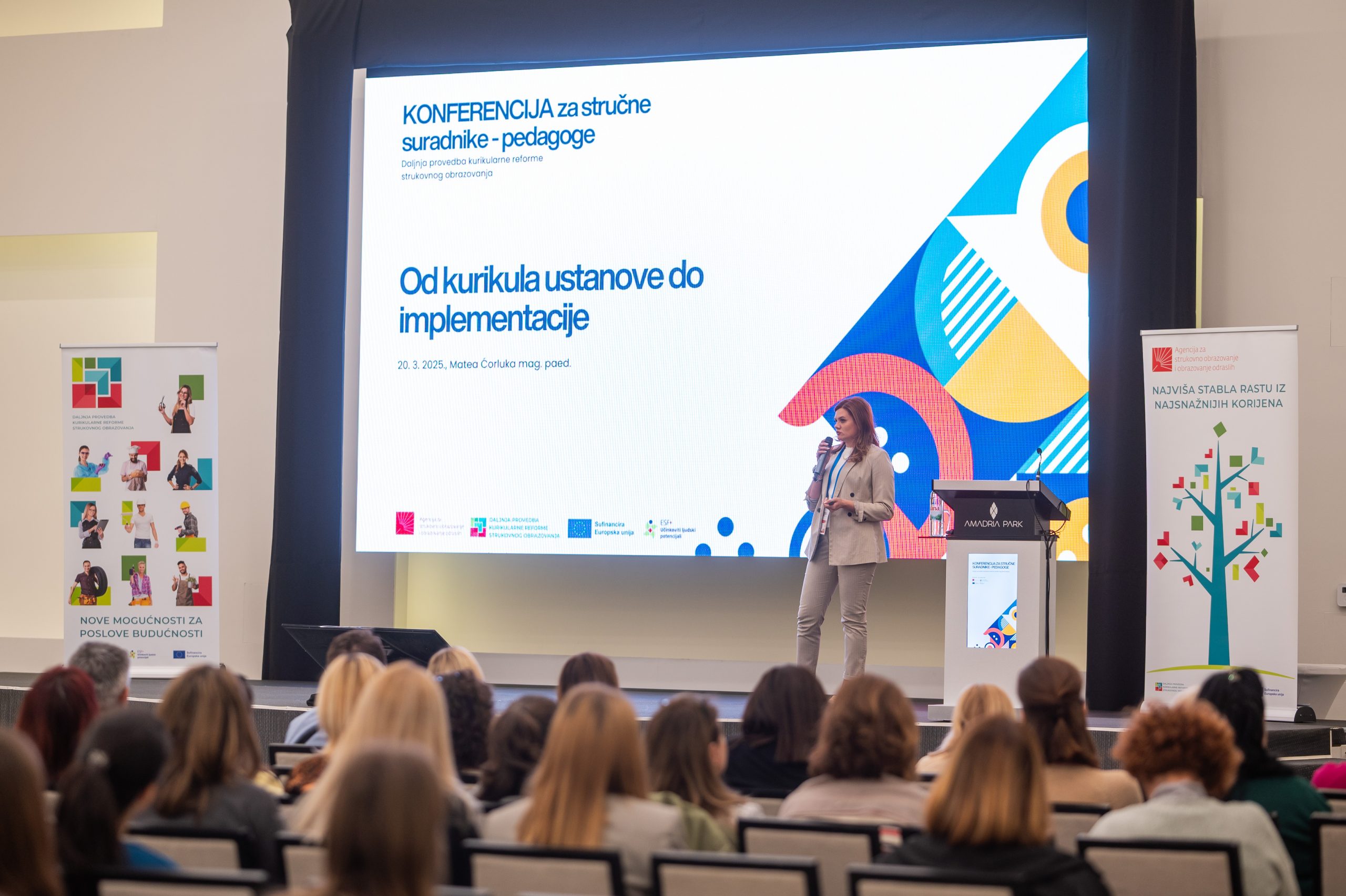
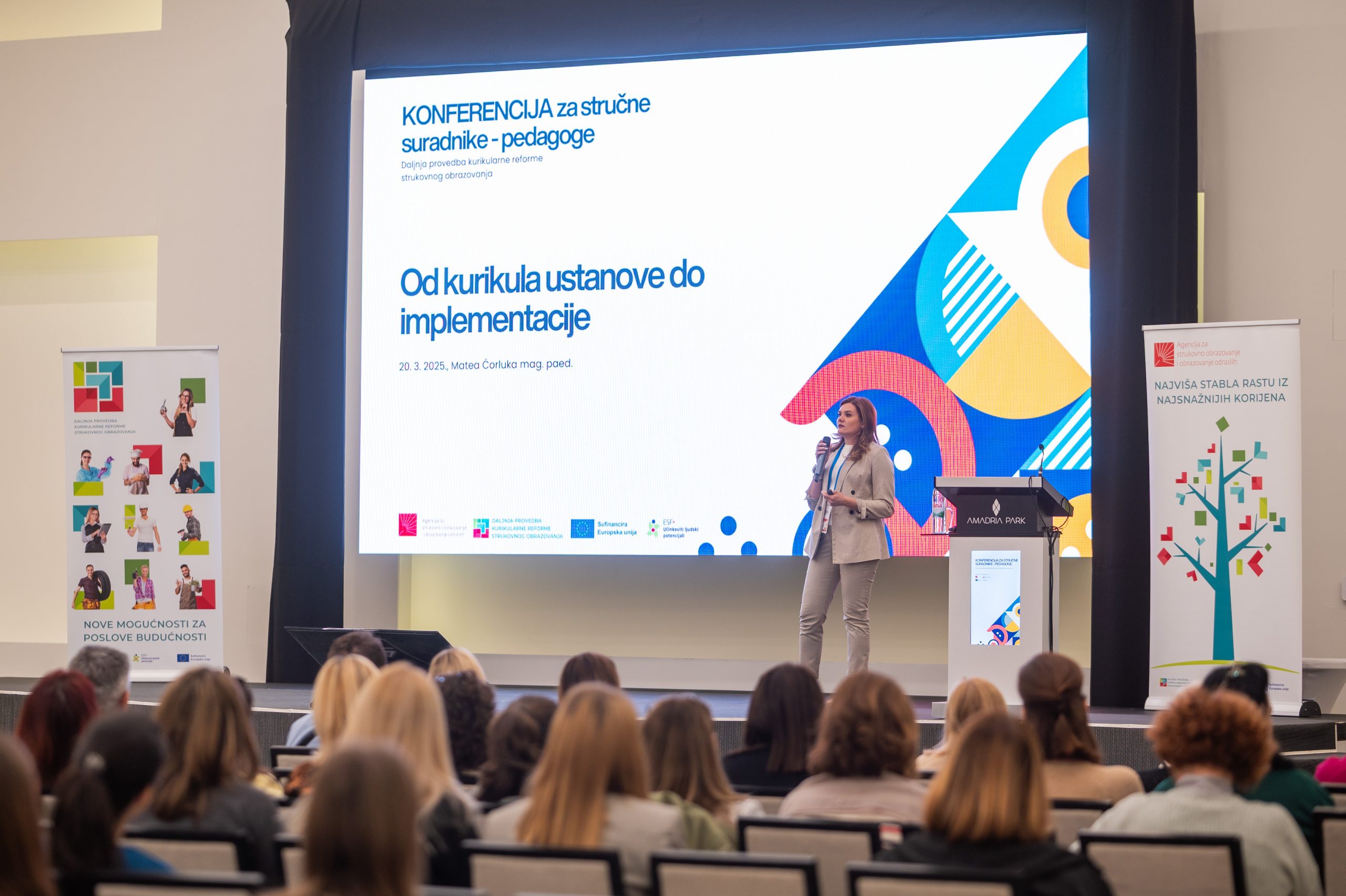
4. Matea Ćorluka – “From Institutional Curriculum to Implementation”
Pedagogue Matea Ćorluka presented the experience of the Technical School Slavonski Brod in the process of implementing modular instruction. Using the example of an experimental program for acquiring the qualification of Technician for 3D Technologies, she explained the development of the institutional curriculum and its practical application. Special emphasis was placed on the role of the pedagogue in modular instruction, who provides support to teachers and students, participates in organizing work, and helps resolve challenges in implementation. The advantages of modular instruction were highlighted, such as increased flexibility and a student-oriented focus, as well as challenges, including teacher adaptation and organizational changes. It was concluded that key success factors include teamwork, clear organization, and gradual adaptation to the new way of teaching.
Od kurikula ustanove do implementacije, Matea Ćorluka
5. Blaženka Pul – “Communication and Cooperation Between Teachers and Professional Associates in Modular Instruction”
Pedagogue Blaženka Pul delivered a presentation on “Communication and Cooperation Between Teachers and Professional Associates in Modular Instruction.” Through the lecture, participants learned about the key role of effective communication and cooperation in the successful implementation of modular instruction. Modular instruction brings changes in the organization of the educational process, so it is necessary to ensure support for teachers through education, mentoring, and clear guidelines in the development and implementation of curricula. Special emphasis was placed on challenges that teachers face, such as understanding modular instruction, the absence of subject division, and the need to adapt teaching methods and the assessment of learning outcomes. The pedagogue and other professional associates play an important role in providing support to teachers, encouraging creative and innovative approaches, and adapting the educational process to the diverse needs of students, including gifted students and those with difficulties. Successful implementation of modular instruction requires open communication, teamwork, and flexibility from all participants. Regular meetings, exchange of ideas, and resolving uncertainties through dialogue are key to improving the educational process. A clear curriculum structure, cooperation of all stakeholders, and continuous education enable higher-quality instruction that is student-focused and competency-oriented.
Komunikacija i suradnja između nastavnika i stručnih suradnika u modularnoj nastavi, Blaženka Pul
6. Nataša Stefanovski – “Project-Based Teaching – The Role of the Professional Associate”
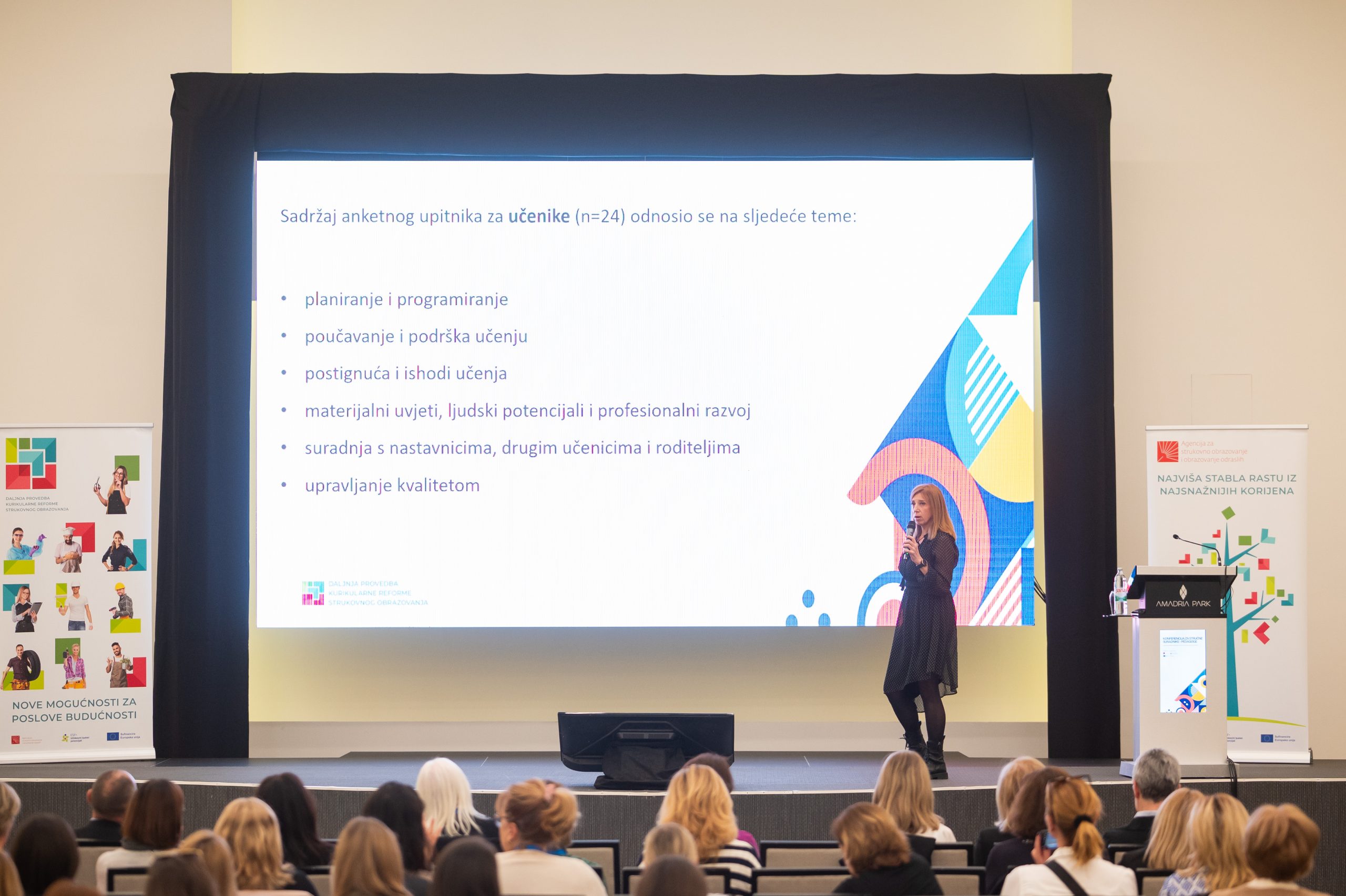
Nataša Stefanovski, a professional associate – psychologist, emphasized the importance of professional associates in implementing project-based teaching within the framework of curricular reform in vocational education. She presented the “Tourism Technician of the Destination” program, which enabled students to acquire specialist skills in tourism and hospitality through work-based learning. Students were involved in all phases of the project, from creating the visual identity to presenting sustainable tourism practices, with special attention given to developing communication skills and business etiquette, which are important for students’ professional performance in tourism. The evaluation of the experimental program included surveying students, teachers, and parents, which identified challenges such as lack of space, equipment, and systemic support.
Projektna nastava – uloga stručnog suradnioka, Nataša Stefanovski
Also provided are the presentations from the advisory workshops:
Grupa 1_Radionica_Konferencija za stručne suradnike pedagoge
Grupa 2_Radionica_Konferencija za stručne suradnike pedagoge
Grupa 3_Radionica_Konferencija za stručne suradnike pedagoge
Grupa 4_Radionica_Konferencija za stručne suradnike pedagoge
Grupa 5_Radionica _Konferencija za stručne suradnike pedagoge
Grupa 5_Radionica_Konferencija za stručne suradnike pedagoge
Grupa 5_Radionica_Konferencija za stručne suradnike pedagoge
The Conference for Professional Associates – Pedagogues emphasized how pedagogues, with their motivational and organizational skills, play a key role in the successful implementation of the reform. Conference participants were provided with guidance and tools for improving their own working methods and adapting to new curricular requirements and were enabled to connect with colleagues from all over Croatia – which is important for future cooperation and knowledge exchange.


SHARE